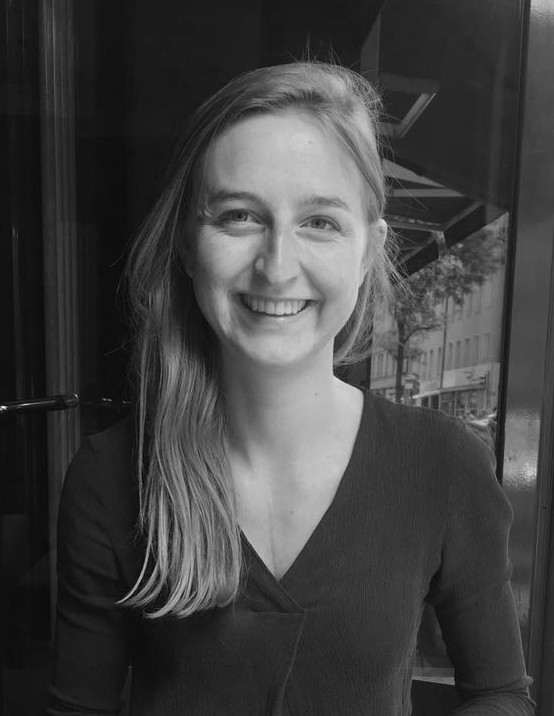
Interview with Nora Kassner
LMU Munich
Soapbox: Did you choose a scientific career or did the scientific career choose you?
Nora Kassner: It was a combination of both. My dad always encouraged an interest in science. This certainly helped while I was still in school but then it was an active choice.
SB: What was the key moment that brought you to the place where you are today?
NK: Before starting a PhD in Computer Science, I did my Bachelors and Masters in Physics. The very first semester was the hardest by far and several times I thought about quitting and was certainly not alone with that thought. What probably kept me going was the growing ability to understand things and the feeling of shared hardship with fellow students. I remember in the very first semester, I got excited when we learned about planetary orbits. It wasn’t something I expected to be able to understand half a year after leaving school. These small and big discoveries are the reason why I am where I am right now, I guess.
SB: What is your scientific superhero power? Or what superhero would you be?
NK: I transitioned to “Natural Language Processing”, a branch in Computer Science that falls into the category of “Artificial Intelligence”. Put simply, Natural Language Processing tries to teach a computer human language. It’s a technology that we encounter more and more in our daily life.
My scientific super-power is the ability understand the technology hidden behind these “intelligent” systems, more specifically being able to see their faults.
SB: What is the most exciting aspect of your research?
NK: The speed with which the field is moving is impressive. It is quite amazing how realistic the systems are becoming that I often get surprised with the new findings. Another beautiful aspect of it is that we can already find the products of that research very much amongst us! It is exciting to be part of this process.
SB: If you were stranded on a desert island, what scientific equipment would you bring with you?
I guess a computer as that is the only scientific equipment I work with these days (that’s a bit sad).
SB: What challenges do you encounter in science?
NK: Research can be very frustrating, it’s a lot of work and is very competitive. Sometimes things do not work according to plan, sometimes mistakes also happen. A high focus and endurance is needed.
SB: What motivates you to give a talk in Soapbox Science?
NK: Female scientists are still underrepresented in general public. Girls are less encouraged to pursue science than boys. Soapbox Science is a great way to change this. The only way to get more women into science is to inspire young girls. To do so we need to have a big public platform, show the wide range of possibilities and most importantly, the fun in science.
SB: Do you have a few words to inspire other women or young scientists?
NK: For me, science is an endless process of questioning and understanding things. You discover a lot of interesting things and along the way, this process reveals the hidden marvels of nature and human thought. The simple act of discovering new things is very exciting. Also, you meet like minded and enthusiastic people which make the process even more fulfilling!
SB: In these quarantine days, what funny/interesting experiments, books, talks or podcast can you recommend to our audience?
NK: In my free time, I actually prefer reading non-scientific literature. The book I read during the quarantine time is “The World of Yesterday” by Stefan Zweig.
You can connect with Nora on Twitter.
 Soapbox Science Munich