Interview with Dr. Weiwei Xu

Helmholtz Centre Munich
Soapbox: Did you choose a scientific career or did the scientific career choose you?
Weiwei Xu: I both consciously and unconsciously chose science as my career. It is conscious in the sense that I am good at wet lab research and I enjoy its challenging nature. Throughout the years, I discovered that my core values are helping others and doing meaningful work. Conducting research in health science and exploring a disease cure also unconsciously align with my values.
SB: What was the key moment that brought you to the place where you are today?
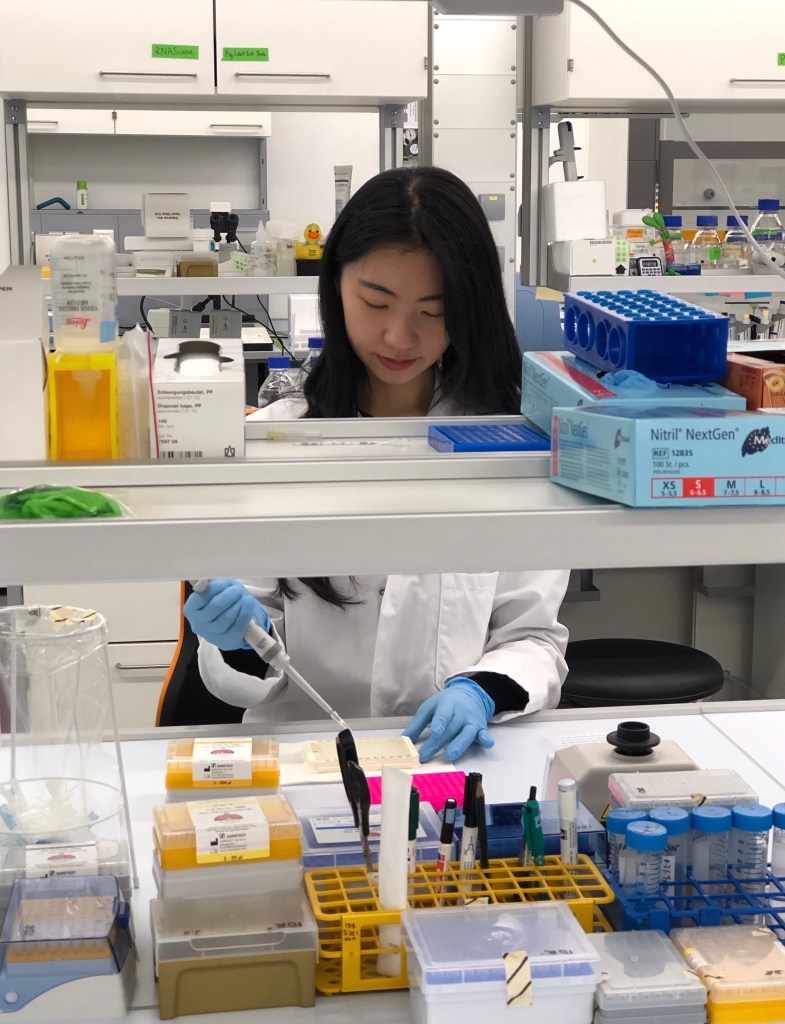
WX: Besides my role as a researcher, I consider myself a passionate advocate for science communication and public engagement. My passion stemmed from my experience in the third year of graduate school: I published a paper in the prestigious journal Cell Metabolism and our research described how aging men are predisposed to type 2 diabetes. My friends and family congratulated me on the achievement. However, most of them did not even understand the title of my paper. This made me realize how important science communication is and there is an urge in me to deliver science and health information to not only the scientific community but also to my family members, friends, and the general public.
SB: What is your scientific superhero power? Or what superhero would you be?
WX: It will always be unlimited positivity.
SB: What is the most exciting aspect of your research?
WX: The exciting aspect of my research is to explore targeted therapy for the treatment of diabetes. For a long time, females and minorities were excluded from the clinical trials on drugs; however, gendered- and racial-differences led to varied drug responses. For example, the same dose of one medicine, safe for a Caucasian male, may not be safe for an Asian female. In addition, if the drug is non-targeted at the diseased tissue, it can have undesirable side effects in healthy tissues.
There is still no cure for type 1 diabetes. As a result, our research is tackling the challenge of personalized therapy in a targeted format for the treatment of type 1 diabetes, providing a more efficient and safer therapeutic approach to every individual.
SB: If you were stranded on a desert island, what scientific equipment would you bring with you?
WX: I will bring a big box of matches. They can be used (1) to boil seawater into drinking water, (2) to cook food, and (3) to provide warmth and possibly create rescue signals.
SB: What challenges do you encounter in science?
WX: The biggest challenges that I encounter in science are to keep critical thinking and always prepare to challenge the status quo. What had been described as the classical pathways could just happen to be discovered first. The non-classical pathways could be as essential, if not more, compared to the classical ones. We should not be discouraged if the findings are not 100% consistent with the textbooks. Every discovery helps to advance our understanding of Nature.
SB: What motivates you to give a talk in Soapbox Science?
WX: As scientists, we spend more than 1/3 of our time doing research and, in my case, health research, which I believe is of great benefit to a large group of people. However, there is a knowledge gap between the benchwork scientists and the general public. It gives me great satisfaction during the science communication and public engagement events that even one person discovers a new aspect or finds the information useful. Soapbox Science makes me, other female scientists and our research more accessible to the general public. It also encourages girls to join the world of science, which I find very rewarding.
SB: Do you have a few words to inspire other women or young scientists?
WX: Commonly, female scientists need to work harder to prove our worth and we have to go through more doors to reach the same room than our male colleagues. I am delighted to see that the situation is rapidly changing; it is more based on merits than gender. Senior female scientists are more present, supporting and opening doors for younger female scientists, and we are not alone.
SB: In these quarantine days, what funny/interesting experiments, books, talks or podcast can you recommend to our audience?
WX: I would recommend the podcast Science Weekly from the Guardian, which at the moment is exploring the essential questions about the COVID-19. I would also recommend Coursera which will provide various top-level courses in Science or other disciplines around the world for free. The quarantine days can be a very good time for learning and intellectual advancement.
You can connect with Weiwei on Twitter.
 Soapbox Science Munich