Biology as a teacher by Victoria Shabardin
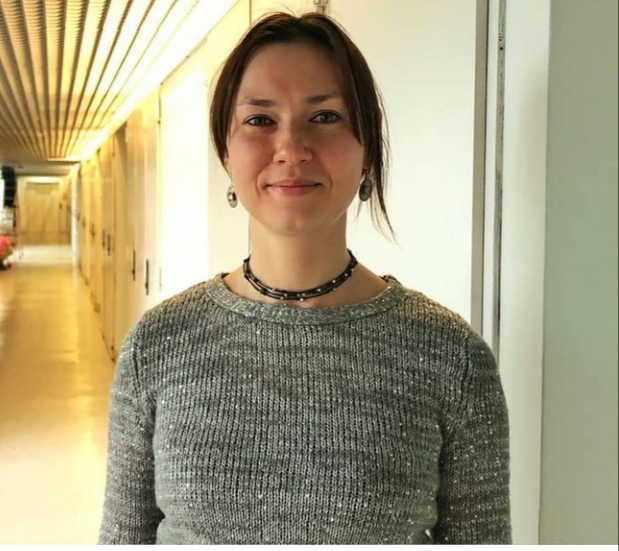
University Pompeu Fabra Barcelona
I became totally amazed by biology classes in school when I was 10 or 11. I was always lucky with the teachers and it’s their merit that I became so interested in the subject, but here I want to talk about my greatest teacher – biology itself. Learning nature’s laws influenced my perception of the world and even of my life, to some extent.
I might write in a somewhat exaggerated fashion here and I might as well be biased in my affection for science, but I think it’s no harm. After all, there is much more romanticism in science than we are used to think. So, my first romance started at the botanics class when we studied how a leaf is built, that it has layers made of different types of cells, and what they do for the plant. Later that day, I walked on the street and suddenly my perception of trees around me was all different. I looked at a leaf on a tree and imagined how its cells breathe and make energy – that they are very busy living their plant life. It felt as if the silent world of plants opened to me and I could see through it and read its signs.
At the University, we learned more about how cells of plants, animals, algae, and bacteria function. It got more “technical” – formulas, molecules, equations. Nevertheless, every time I mastered a new rule of biology, I could visualize and transfer it to the things I see every day. How does the heart of that playing in a park dog beat? I can imagine. How does that lichen feed on an old dry piece of wood? I know. What happened inside me when unfortunately I broke my leg? I could explain (and it also made me less scared). The words biochemistry, physiology, and even thermodynamics sounded charming. Of course, sometimes I felt bored and annoyed by the studies. But it paid back – I could open doors to more and more dimensions of life.
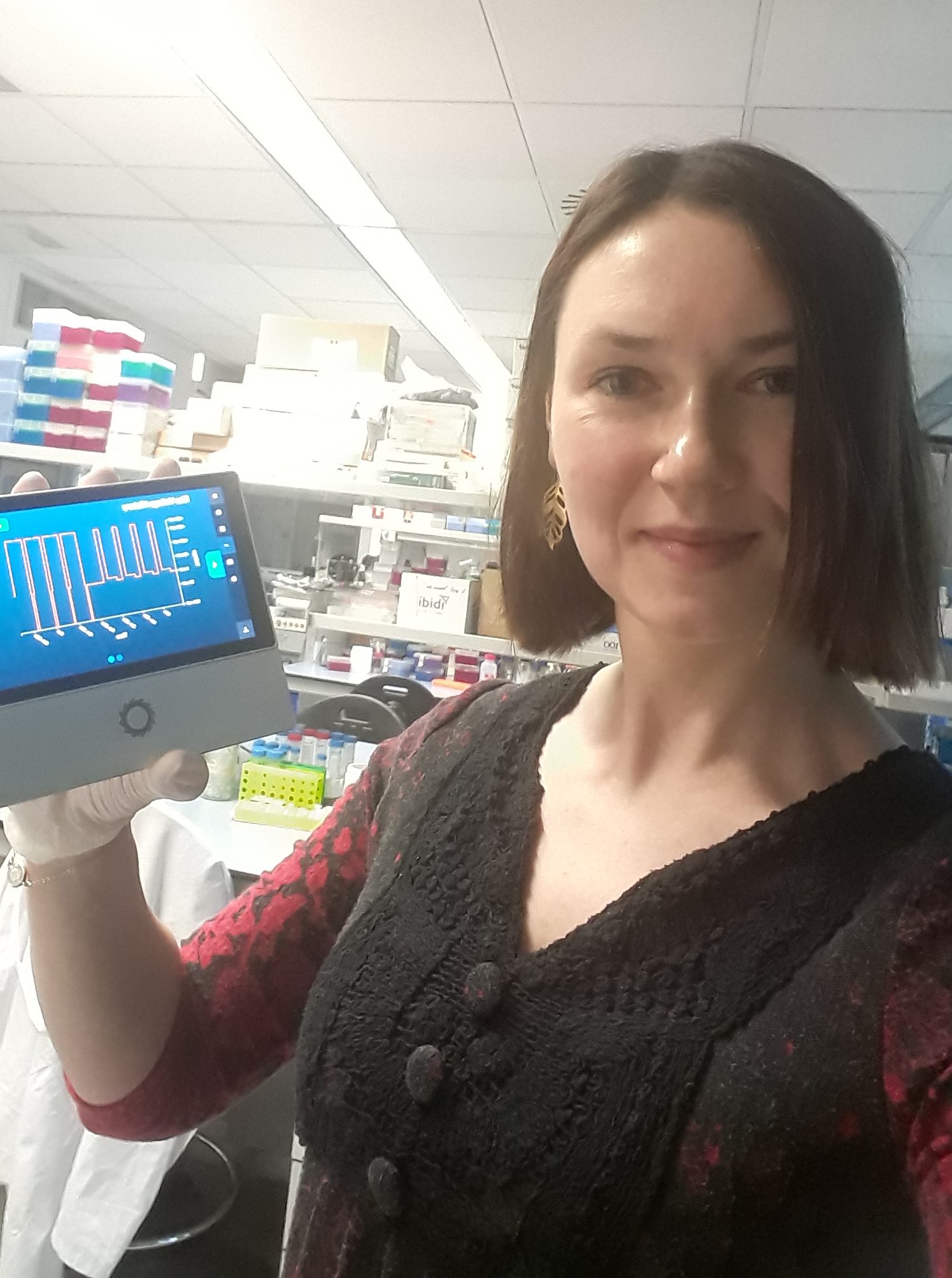
University Pompeu Fabra Barcelona
So I went through my Ph.D., amazed as usual but not able to choose my directory. And this is very important in a researcher’s career – to concentrate on your favorite topic and become a specialist. Neurodegenerative diseases, photosynthesis, embryo development, fish ecology… I did not know what to choose. It took me some time but I found a solution – evolution. Now I am studying the phenomena of the origin of multicellularity, i.e. how multicellular creatures (like animals) appeared and evolved from a single cellular ancestor. Luckily, this research field covers almost every area in biology – genes, proteins, development, molecular tools, metabolism, the interaction between cells, cells changing their identities, stress and environmental factors, ecology, bioinformatics, and also imagination and creativity. In such an arrangement, I never stop studying.
Evolution taught me, among all, about the interconnection: that people did not just appear with all the communities and cultures, rather life went its slow pace to create a complex system where people can evolve and survive. Of course, we all know that as a solid fact, but rather in a textbook fashion. We don’t really imagine this and keep self(human)-centric. But life has its own vision: how it went from the first organic molecules to the first cell, then to the first tiny and simple animal dependent on oxygen produced by algae and microbial communities that manufactured the environment around it. The incredible diversity of different life forms evolved since the origin of life, finally leading to humans – just very recently in the time scale of the history of the Earth. Biology taught me that there is no bigger marvel as the cell – a tiny unit of life. No computer, no space rocket, no piece of art yet recreated the zest of life and robustness to survival that cells have. Every critter that has one or many cells is a great achievement and worth admiration. And so I walk my life – at times submerged to lab work till late night, sometimes just hanging there and staring at leaves 🙂
Check out the video of cells here
You can connect to Victoria on Instagram and follow her Webpage.
 Soapbox Science Munich