Interview with Dr. Eteri Svanidze
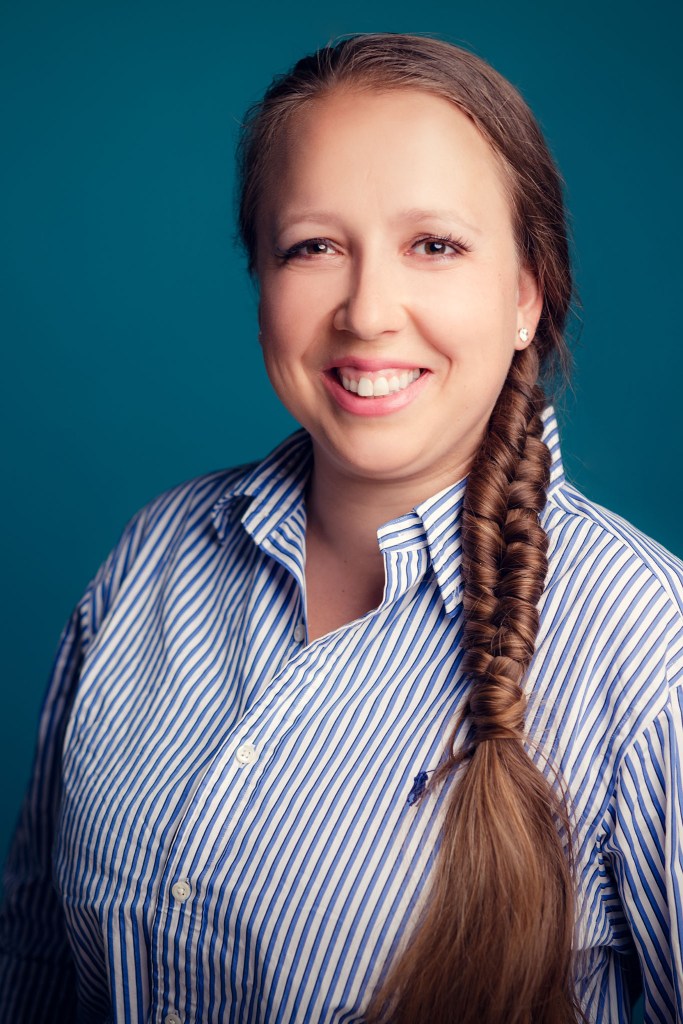
Postdoctoral researcher at the Max Planck Institute for Chemical Physics of Solids
Soapbox: Did you choose a scientific career or did the scientific career choose you?
Eteri Svanidze: From a very early age, mathematics and physics offered insights to whatever I found interesting at that age, so that science and I attracted each other. In fact, I remained equally interested in math in physics for the longest time so that, even as an undergraduate student, I could not pick one over the other and pursued a double-major. When the time came to apply for and select a graduate program, I gravitated towards condensed matter physics. And once I learned about the process of solid-state material design and discovery, I was instantly hooked!
SB: What was the key moment that brought you to the place where you are today?
ES: I think it is hard to pinpoint just one moment since there have been many important and interesting twists in my scientific career. For example, my move to Germany was not at all the consequence of a long-term plan, as I had initially intended to stay in the United States. My interest in Germany as a place to carry out my scientific work is mostly due to the exceptional conditions provided by the Max Planck Institute for Chemical Physics of Solids in Dresden. The ability to perform cutting-edge research is not only due to great infrastructure, but also due to the diverse, international, and incredibly motivated scientific community at the institute.
SB: What is your scientific superhero power? Or what superhero would you be?
ES: My superpower is to predict which properties a new material may have, based on the element it contains. At least, that is what I am trying to do, so that I can focus on those unknown materials which actually might be the most promising ones.
SB: What is the most exciting aspect of your research?
ES: For most of my work, I look at materials that have not yet been studied – specifically, new combinations of chemical elements which promise to have unique physical properties. In this sense, I find great joy in going where no one else has gone before.
SB: If you were stranded on a desert island, what scientific equipment would you bring with you?
ES: A magnifying glass.
SB: What challenges do you encounter in science?
ES: The materials I work on are very complex – so to understand their properties we need a very large toolbox with many specialized tools. Much time and care are needed to pinpoint how exactly we can study a given material. While sometimes solving these puzzles can feel a bit overwhelming, I find that each new material which we discover expands our horizons.
SB: What motivates you to give a talk in Soapbox Science?
ES: I’m very passionate about communicating my work to not only my colleagues, but also to people outside of the scientific realm. I have been taking advantage of open house outreach opportunities to educate and showcase scientific phenomena to people of all ages – from kindergarteners to retirees. I believe that raising scientific awareness by means of science communication can foster much-needed scientific curiosity in our society. I think that Soapbox Science offers a unique way of reaching audience of all ages and backgrounds, while simultaneously showcasing the diversity of the scientific world.
SB: Do you have a few words to inspire other women or young scientists?
ES: I think it is important to enjoy the work that you do. But as with any job, there are difficult moments that test your commitment and drive. For me personally, the trade-off is worth it, and I encourage younger scientists to not only persevere even during the hard times, but actively seek support from their colleagues who may have gone through similar experiences.
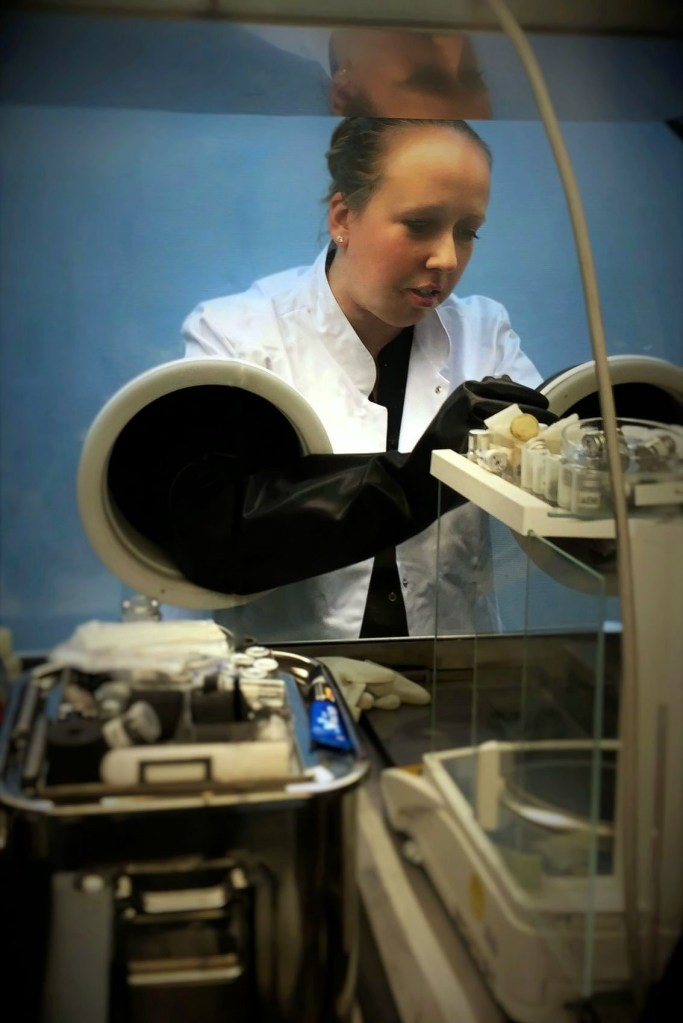
Postdoctoral researcher at the MPI CPfS
SB: In these quarantine days, what funny/interesting experiments, books, talks or podcasts can you recommend to our audience?
ES: A few years ago, I started “PhysicsInPictures” – an interactive platform that explains everyday pictures from a scientific point of view. I have really enjoyed the feedback of the community – this platform opens a dialogue and it has been great to interact with people interested in science especially when our regular outlets are not available.
 Soapbox Science Munich