Interview with Iliana Siamishi

PhD student at the Biomedical Center (BMC), LMU
Soapbox: Did you choose a scientific career or did the scientific career choose you?
Iliana Siamishi: I would say I actively chose a scientific career. As a teenager I got the opportunity to visit a research lab in my hometown in Nicosia. I was at that time impressed by the working environment in the lab; it never felt like a routine, always learning something new, people were friendly and motivated. After that, I decided to study biology and despite the fact that I took that decision at such a young age, the rewards of my decision were always much more than the occasional obstacles.
SB: What was the key moment that brought you to the place where you are today?
IS: It was more a sequence of events than a key moment that brought me to a place where I am today. Even though is not easy being away from home, research opportunities are much greater in Germany than in my home country Cyprus. That’s why, after my graduate studies, I decided to stay in Germany and join a PhD program at the Max Planck Institute for Immunobiology and Epigenetics in Freiburg. There, I had an amazing time studying developmental immunology in an extremely international and nurturing environment but I also met my boyfriend, another PhD candidate from Munich. After finishing our PhDs, we thought Munich will be a nice place to live, combining an academic flair and a home like atmosphere. So recently and just before the second lockdown I moved to Munich to start a research project on autoimmunity, an aspect of immunology that is still a black box for me. I now look forward to also experiencing more of Munich, which has been quite impossible so far regarding the current pandemic situation.
SB: What is the most exciting aspect of your research?
IS: The most exciting aspect of immunology research is the complexity of the immune system. There are so many different types of cells involved in the body’s defense against pathogens. On top of that, within individual types of cells, such as the T and B lymphocytes, you have an enormous degree of diversity regarding what these cells can “see”…and they can theoretically see everything! This is mainly making sure our body is able to recognize any possible intruder threatening its well-being. It is quite challenging to try to understand and simplify this complexity and it has been a headache for many researchers over the last decades. But this is also the beauty of the immune system and what keeps this field of research exciting
SB: What challenges do you encounter in science?
IS: Many scientists, including myself, often complain about work-life balance. Some weekends need to be sacrificed for experiments or many times work related thoughts follow us at home and make it hard to relax. However, the most challenging thing in science is the professional insecurity. It is a competitive field without many permanent employment opportunities, so people need to move from one temporary position to the other. Moreover, quite often, hard work unfortunately does not directly translate to success. Sometimes you can be lucky and other times you need to find a way out of academia.
SB: What motivates you to give a talk in Soapbox Science?
IS: I was motivated to give a talk in Soapbox Science after realizing how little of what we do in the lab is being communicated to the general public. Even though research is to a big part funded by public money, there is quite a big gap between scientific research and information shared with the public. It is our duty to fill that gap. Moreover, it is a challenging opportunity to try to communicate my work in a much different way to what I am used to so far. I see it as a chance to get out of my comfort zone and I really look forward to seeing people’s reactions to my talk.
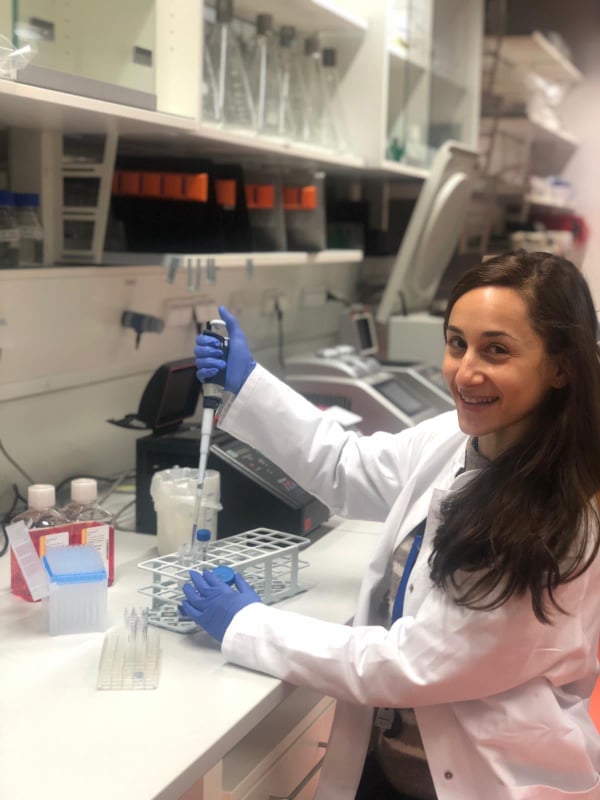
PhD student at the Biomedical Center (BMC), LMU
SB: In these quarantine days, what funny/interesting experiments, books, talks or podcasts can you recommend to our audience?
IS: I am happy to recommend two books that are for me great examples of science communication. The first one is “The immortal life of Henrietta Lacks” by Rebecca Skloot. In this book, she describes the scientific and non-scientific events that led to the first “immortal” human cells being grown in a laboratory. The cells, known as HeLa cells, were isolated from the cervix of Henrietta Lacks, a poor black woman suffering from cervical cancer. The book celebrates Henrietta Lachs’ contribution to countless discoveries of modern science long after her death but also raises awareness on social issues around racism and bioethics. Only a small warning…it can bring you to tears.
The second book is “The man who mistook his wife for a hat” by Oliver Sacks. This is a story telling book, in which Oliver Sacks talks about some of his own patients that suffer from strange neurological defects. Despite their bizarre neurological conditions, other brain abilities such as mathematical thinking or drawing can be incredibly enhanced in those patients. This book highlights the beauty of the human brain and teaches that there is no loss without a win.
You can connect with Iliana on LinkedIn, Instagram, and Facebook.
 Soapbox Science Munich