The pain of programming – my short success story to give you hope: Dr. Anna Biller
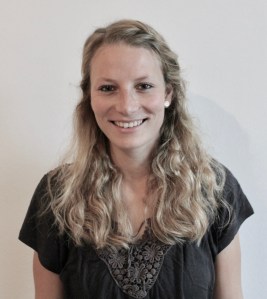
Postdoctoral researcher at the Institute of Medical Psychology, LMU Munich
I’m still not amazing at it – BUT – I’ve managed to solve every programming problem I’ve encountered so far. More importantly though, I enjoy it and it is THE SKILL I’m most proud of among all the things I’ve learned during my PhD. But let me start from the beginning:
Ever since I started studying, I knew that one day I wouldn’t be able to escape anymore. I kept thinking about the comments from (male) programming geeks who told me that coding “is nothing else than learning a language”. Since I had always liked foreign languages, it remained a mystery to me why I found it so hard to learn R or Matlab. In fact, this metaphor made it even worse, since I believed that programming should be quite easy to learn and yet I simply couldn’t do it! During my B.Sc. I eventually participated in a Matlab course held by a psychologist. I thought at the time: “hey, he is also a psychologist so I should be able to learn this somehow since he probably thinks just like me…”. In the end, it was an OK experience but did not leave me excited or even slightly optimistic and I realised that the teacher used different mental concepts to understand programming compared to myself. I also couldn’t really relate to the language metaphor so I kept ignoring all those programming languages and muddled through my analyses with Excel and SPSS. I even managed to survive without programming skills several years into my PhD. But then the due day finally arrived…
I needed to analyse thousands of school grades in a longitudinal dataset. Excel already crashed when I opened the first sheet so I took a deep breath and acknowledged that this was THE DAY. I eventually decided to do several things that in hindsight turned out to be really valuable and which I want to share with you now:
A. How to choose your programming language
- Choose a language whose syntax you find most intuitive – even if you find them all horrible, there is one that is the least difficult one. Take it!
- R was a good choice for me since it is open-source and there is plenty of freely available resources online.
B. Take your time and forget about all your expectations
This is probably the hardest step since it will take time and we constantly work under time pressure. But for me this was also the most valuable step:
- I gave myself 1 month of simply playing around with R. This way, I forced myself to stop focusing on my actual goal (to analyse my data) but on the process of achieving my goal (to learn how to analyse my data).
- Find the fun in it to overcome the initial slow momentum: I graphed my sample data in all sorts of meaningless ways and crazy colours just because I like beautiful graphs.
- Stop comparing yourself with all those intimidating geeks. It is about YOU and finding your own, unique way.
You might have noticed that I kept going on about the male teachers I encountered on my way. I come from a background which definitely influenced my conceptualisation of what I can do as a woman – even though I’m quite aware of it and always thought that this is totally outdated. Especially when it comes to fears or things I’m not good at, I often realise that these are skills that men are still portrayed as “better” at or are at least more visibly doing in our society. This applies to mountaineering (my hobby), to which you’re still often introduced by a male friend/father/coach, as much as it still applies to STEM subjects or programming. Not having (many) female role models who demonstrate that there are female or simply other ways of climbing, programming, or leadership has left me quite deeply influenced when I was younger. I think we often try to do “male” things in a “male” way – whatever that eventually means but it definitely means that we don’t do things in our own way. It was only until I found my own method of learning R that succeeded.
And one last note: programming is NOT “just like” another foreign language – now that I can judge myself I totally disagree with this metaphor – but find out yourself! ☺
Helpful resources:
- The R Ladies (worldwide organization whose mission is to promote gender diversity in the R community; they offer local and web-based tutorials)
- “Discovering statistics using R” by Andy Field (book)
- Visualisation master list by Selva Prabhakaran.
- Stack overflow (general platform for coding questions).
You can find Anna here.
 Soapbox Science Munich