You CAN be an astronomer – Why Chile still needs outreach activities about astronomy focused on women by Maria Teresa Valdivia Mena
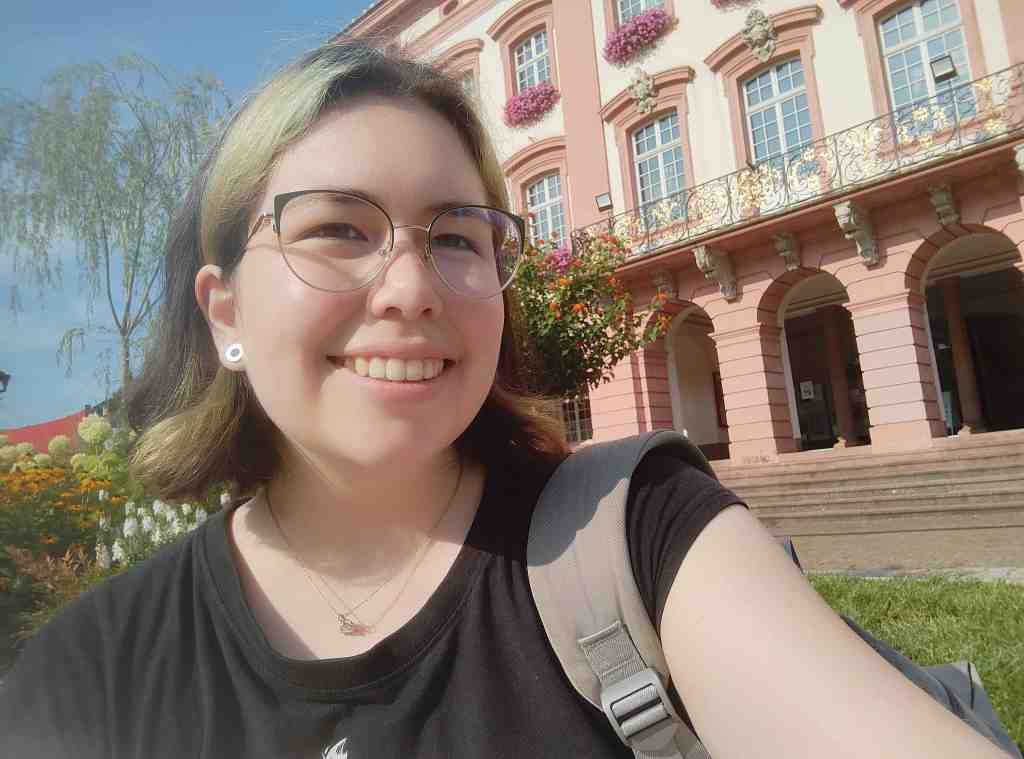
Max Planck Institut für Extraterrestrische Physik
My arrival to the outreach group “Cazadoras de Estrellas” (Star Hunters in Spanish) was completely by accident. I heard of a “women grad students only” meeting at the Astronomy Department at Universidad de Chile, during the first semester of my Master in Astronomy, and out of curiosity and to mingle with my new office mates, I entered the meeting room, said hi to everyone, and took a seat. Five minutes in, I realized this meeting was for a women-oriented outreach project that had won ESO funding recently, and they were planning the next steps. After a small apology for the confusion, I asked if I could stay, as I was looking for chances to do more outreach. Fortunately, they said yes! What I did not imagine at the time was that this outreach group would leave a deep impression on me and influence how I would approach my future as a female astronomer.
“Cazadoras de Estrellas” is an initiative born from a group of female Astronomy graduate students from the University of Chile, to increase the visibility of real female astronomers and show how astronomers work. For this, we do workshops for women in high school interested in STEM careers (Science, Technology, Engineering and Math), where they learn a little bit of what a job in astronomy looks like. The scientific theme of the workshops is variable stars because they connect neatly to the history of Henrietta Leavitt, the astronomer who discovered the Period-Luminosity relation for Cepheids and, this way, we segway into conversations about women in astronomy. We also teach a bit of programming, what is light and how we use it for our research, and what a career in academia looks like (because it is way different from a typical professional career in Chile… or elsewhere, honestly). In every workshop done so far, the most emotional instance is when we talk about some of the problems we or other fellow female astronomers have experienced in academia, and we also hear about the attendees’ experiences as women interested in studying a STEM career in the future.
Our workshops have been very popular: for our in person workshops we had more than 500 total applicants, and almost 300 during the pandemic, for which we went online. Part of that success might come from the fact that astronomy is a popular subject in Chile, with respected chilean public figures being astronomers, such as José Maza and María Teresa Ruiz. The former even filled a stadium with 10 000 people for a public talk during the 2019 solar eclipse. It is also true that Northern Chile is the most popular site to build telescopes, so much so that for 2030 it will have more than 50% of the total collecting surface of astronomical instruments worldwide1.
At this point you might be wondering, if astronomy is so popular in Chile, are workshops like this necessary? The short answer is yes. After my experience with this outreach group, from my personal point of view (which does not represent the view from the Cazadoras de Estrellas group for all legal purposes), there are two facts that make this kind of activities still necessary in my home country: the percentage of women in astronomy is still low and there is a general lack of knowledge of what astronomers actually do.
Even though astronomy is a popular subject in Chile, women in this side of academia are a minority higher up in the academic ladder. From the last astronomers’ census of the Chilean Society of Astronomy (SOCHIAS), PhD students are practically half men, half women (54% men, 46% women), but the ratio decreases by more than 10% when looking at postdocs (69% men, 31% women), and drops even more for tenured track positions (79% men, 21% women). This is, of course, not only a chilean thing: worldwide, there are much less female astronomers than male2. Also, this decrease in female presence is not particular to astronomy, in fact, women represent around 31% of the the PhDs working as university researchers in Chile3.
In my opinion, this disparity reflects the misogyny and sexism still present in Chilean society today. Even though it is better than in the past, there is still a deep rooted sexism in our ways, shown for example, in the difference between the salaries between women and men workers (on average, a difference of 27%4). The pandemic did not help revert this disparity at all: it was estimated that Chile regressed around 10 years in terms of female participation in the workforce due to the pandemic5, as women took the role of caretakers for children and the sick at home. In our workshops, we heard cases of sexism both within the family unit and in social circles first hand. For instance, one participant told us “For a long time I participated in school science workshops, but I was almost always the only woman (…) one time a friend asked me if I was a lesbian because I only did boys stuff, I felt so bad I stopped going.”6 Another testimonial that stuck with me was from a girl that was afraid that her father never spoke to her again if she studied a STEM career, even though she really liked physics. These testimonies have stuck with me. In these situations, I just want to hug these girls and tell them that it is possible, that you can enjoy science and be a girl and that it’s not something to be ashamed of. We need more women higher up in the academic ladder to show girls that science is not a “boys’ thing”.
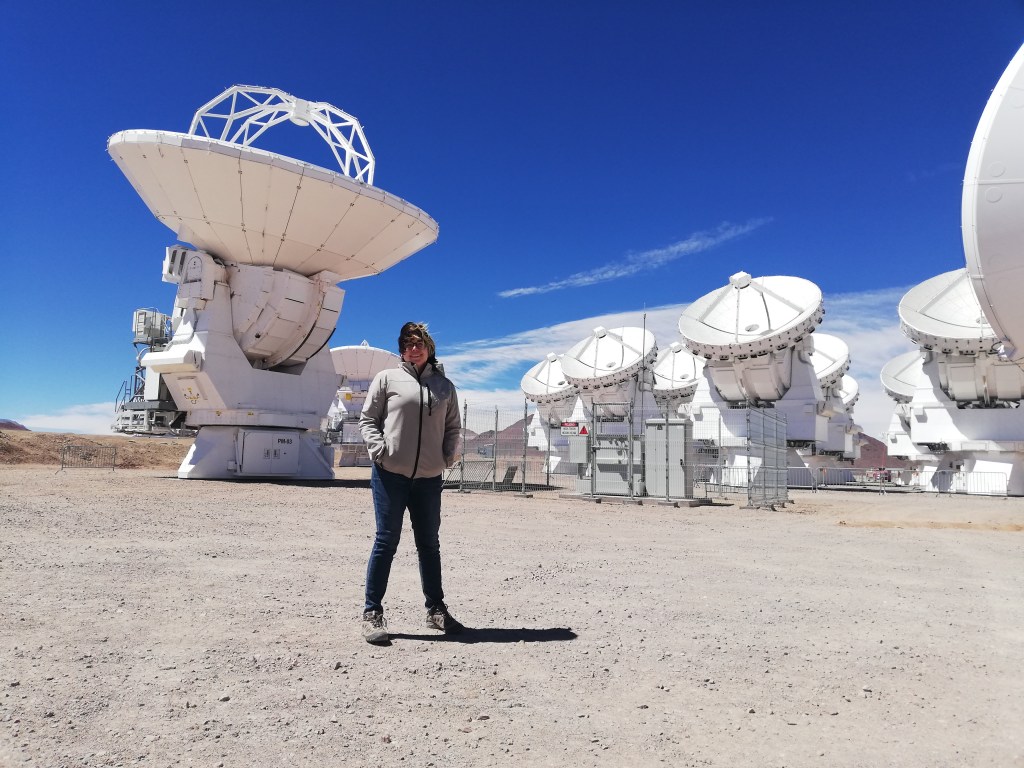
Max Planck Institut für Extraterrestrische Physik
Astronomy is part of the chilean pop culture since a few years, but more in a poetic sense: public outreach in astronomy is usually focused on showcasing what our skies look like, what is out there in the universe, and specially between 2019 and 2020, what are eclipses, to explain why there was going to be two minutes of darkness in the middle of the day. People in general have no instances to learn what astronomers actually do. Most still think we sit at a telescope and look at the sky looking for something new and exciting. Even my parents, when I told them that I wanted to be an astronomer, asked me what my work was going to look like day to day, they had absolutely no idea. This lack of knowledge was also reflected on the data we acquired from our participants in our workshops: most of them thought that female astronomers (because we asked about female astronomers, “astrónomas”, not “astrónomos”) worked at telescopes most of the time, but very few, around 16%, also put universities as a possible workplace, when in reality, universities are the main employers for astronomers. Interestingly, even though they don’t know exactly what we do, they perceive our work as hard, lonely and with lots of sleepless nights (because they think the sky can only be studied at night, which, as a radio-astronomer, I can tell you it’s not true). We asked them to describe the typical day of a female astronomer and almost all stories included a woman that worked much more than 40 hours a week, was far from family and friends and had no time to socialize outside her work. Therefore, whatever we do, our participants perceive astronomy as a tough career, for tough people.

I left my home country to pursue a PhD in Astrophysics in Germany in 2020. Even if I’m not physically there, I still work for Cazadoras de Estrellas. As we went online during 2021, I was able to participate in the workshops from abroad. For some in-person activities, I was able to help with some logistics. I still work with them because I like to work in an initiative with a gender perspective, where we can impact, at least a little, the lives of these girls and help them decide if Astronomy is for them or not. We’ve had girls that decided to study Astronomy after the workshop, and also others that realized that what they liked was actually Engineering, or Computer Science. Whatever they decide to study, we are there for them. We are there, in those workshops, showing that you CAN be an astronomer, if they so wish, and a woman. And, most importantly, that we are not alone. After all, we showcase female astronomers, plural, never singular.
1 https://sochias.cl/wp-content/uploads/2020/05/2020-05-14-Sobre-la-capacidad-astron%C3%B3mica-instalada-en-Chile.pdf
2 https://epws.org/world-wide-data-women-astronomers-from-the-international-astronomy-union/
3 https://api.observa.minciencia.gob.cl/api/datosabiertos/download/?handle=123456789/236718&filename=RADIOGRAFIA%20GENERO%202022.pdf
4 https://www.ine.cl/prensa/2020/03/06/mujeres-en-chile-ganan-en-promedio-27-menos-que-los-hombres
5 https://www.ine.cl/docs/default-source/genero/documentos-de-an%C3%A1lisis/documentos/g%C3%A9nero-y-empleo-impacto-de-la-crisis-econ%C3%B3mica-por-covid19.pdf
6 https://youtu.be/WsNF0bPeXBw
You can connect with Maria on Instagram or visit her Website.
 Soapbox Science Munich