Interview with Dr. Anthi Krontira
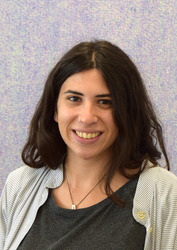
Max Planck Institute of Psychiatry
Soapbox: Did you choose a scientific career or did the scientific career choose you?
AK: I would say both! My father is a physicist so I grew up in labs looking at experiments and in university classrooms looking at the huge blackboard full of physics and math. I was emerged into the scientific world since I remember myself. My earliest childhood memories are of me in my father’s lab in between huge stacks of books and research papers, students and researchers and experiments involving liquid nitrogen and dry ice, which to my eyes as a kid looked super cool, something out of science fiction movies. But I chose Biology. I fell in love with the study of living things and of evolution since the first Biology course at middle school and I never thought of doing anything else. That led me to neurobiology and every day I am happy researching the brain.
Soapbox: What was the key moment that brought you to the place where you are today?
AK: I do not believe in singular key moments. The place I am today is the result of multiple gradual choices, from the emersion into science and research during my childhood, the choice of Biology during my adolescence and the choice of neurobiology during my undergraduate studies.
Soapbox: What is your scientific superhero power? Or what superhero would you be?
AK: Science is persistence. The core of scientific research is studying unknown principles, thus failure is everyday life. Persistence and imagination is a key combination needed for science, in my opinion.
Soapbox: What is the most exciting aspect of your research?
AK: That everything is new! Whatever we find while doing research is something new, sometimes something big, and many times something small but still not known before. Every six months I look back and I realize how much more knowledge I have compared to six months ago and that makes me very happy. I also find extremely exciting “looking” at the brain. Staining brain cells and then seeing them with the microscope through colourful images that include so much information is a lot of fun!
Soapbox: What challenges do you encounter in science?
AK: Scientific research entails long hours and a lot of failures, but it also gives back many moments of joy when finding something new or when an experiment works after months of trying. It is also very collaborative work. Working in a team of curious people is so much fun. In addition, in most cases, the scientist can adjust their own schedule. Even though hours are long, the scientist can usually dictate when they need time-off and take it without having to ask.
Soapbox: What motivates you to give a talk in Soapbox Science?
AK: I strongly believe that scientific research and scientific findings are embedded and dictated by our society. Thus, making science understandable to the general public are both part of the scientist’s job. It is also very fun and many times it opens up new perspectives not before obvious to the scientist who is deeply embedded and focused on the details of what they are doing.
Soapbox: Do you have a few words to inspire other female or young scientists?
AK: I have been very lucky to have been training with female scientists throughout my studies. In addition, the majority of my colleagues are women. Science is not an easy job but I would argue that all jobs have their difficulties. But it is a job very highly driven by curiosity. Thus young people of whatever sex and/or gender who are at the most curious place of their lives are so well suited for this job.
You can connect with Anthi on LinkedIn, Twitter, or Instagram.
 Soapbox Science Munich