Transport proteins – protectors and caretakers of our cells by Daniela Surrer
As a first-time speaker of Soapbox Science, I’m really looking forward to participating in this event. A few years ago, I stumbled upon this event and I attended some talks. When I got the invitation to apply for this year’s line-up, I knew I wanted to take part, and was happy to be selected as a speaker.

Institut für Experimentelle und Klinische Pharmakologie und Toxikologie, FAU Erlangen-Nürnberg
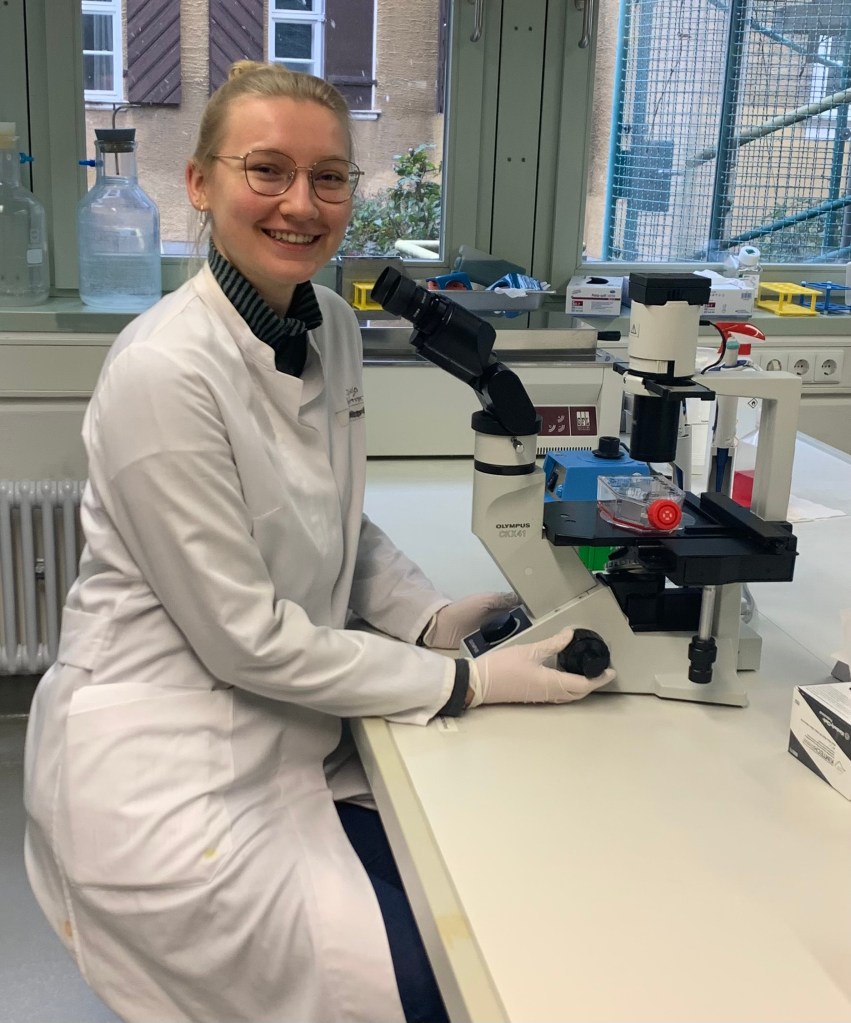
Some quick facts about me: I studied pharmacy in Munich and currently I am a Ph.D. student in clinical pharmacology at the FAU Erlangen-Nürnberg. Doing a Ph.D. thesis was not my primary intention when I started my studies, but during my practical year at the FAU I discovered how much fun scientific work can be and that I want to stay in this field. It definitely was the right decision. I love my work and even though it’s challenging from time to time, I would not want to do anything else. That’s why I want to encourage others who are indecisive about what to do, to pursue a scientific career. It is worth it!
What is my current day-to-day work like? The general subject of my Ph.D. thesis are transport proteins, or transporters for short. They are found in every cell of the human body and have multiple functions. It might be a bit abstract and hard to imagine; that’s why I would like to use a metaphor which could help to better understand my daily work. At first, imagine the human body, look at the belly and zoom in. Go underneath the skin until you can see all organs, like stomach, gut, kidney, or liver. Now pick any organ, for example the liver, and look even closer. What you can see now are the cells the liver is made of. In the membrane, which is the barrier of the cell separating it from its surrounding, you can find the transporters. At this point, I would like you to imagine a house. The walls are the membrane of the cells. To get in or out of the house you need a door which can be compared with the transport proteins. They are able to mediate the transport of different molecules into or out of the cells. But not any molecule can pass through any transporter. If a molecule is transported by a transport protein, it is called a substrate of the transporter and the so called substrate specificity helps to keep a healthy balance in all cells of the body.
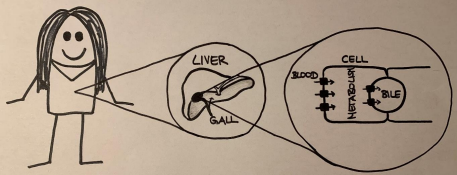
What are those substrates and why do they play a role for our body? On the one hand there are substrates that naturally occur in our body. One widely known example is the group of amino acids. Among other functions, they are the building blocks of proteins, which means every cell needs them to survive. They play a critical role in the homeostasis between a cell and its surrounding and perturbations in their availability are thus closely linked to diseases. That’s why they get access to nearly every cell and there are a lot of different transporters that can mediate their uptake, depending on what the specific needs of the respective cells are.
Institut für Experimentelle und Klinische Pharmakologie und Toxikologie, FAU Erlangen-Nürnberg
On the other hand there are substrates that do not occur naturally, like drugs. They need to be taken up from the blood into the cells, to mediate their desired (or undesired) effects. In short: The regulated uptake of naturally and non-naturally occurring substances is important for health and disease in our body. But transporters also protect our cells by exporting potentially toxic substances out of cells. Let’s stay with the example of the liver. One major task of this organ is detoxification. It metabolizes drugs, food or toxins. Many substances that are not needed are excreted via different transporters into the bile and finally end up “you-know-where” as part of feces.
This is just an excerpt about the many functions of transport proteins. Now you might ask yourself why should that matter to me? As a pharmacist working in the field of clinical pharmacology, it is no big surprise to you that I’m interested in drugs and diseases. We try to identify new substrates, but also potential inhibitors of transporters. This helps us to understand their function for the body and if they play a role in a particular disease. And finally, we ask the question: Could the transporter be exploited as a potential therapeutic target to cure a disease?
You can connect with Daniela on LinkedIn.
 Soapbox Science Munich