Interview with Kavitha Kannan
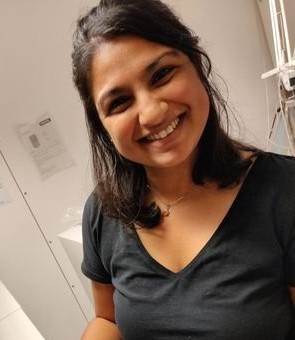
University of Konstanz
Soapbox: What was the key moment that brought you to the place where you are today?
KK: It was 8th grade and all of us kids in school wanted to be cool, and didn’t care much about homework and assignments. But I actually used to enjoy the process of reading and finding new information for my science projects, because well, it was super interesting. I guess, in one of those instances, I also did want to fit in with my class and once submitted a shabby report, and acted uninterested in it when I knew I could have done a way better job. My biology teacher figured out what I was doing and made me meet a high school-er who was determined to become a wildlife biologist and another alumni from my school who went onto become a neuroscientist. Meeting them made me realize of how cool it actually was to be yourself and continue reading, learning new information and making the best out of school. It also showed me how I could just be ‘me’ and take this forward as a career too. Also, the whole notion of only career options as either an engineer, doctor or a lawyer (which is quite typical in India) was wiped clean from my head. This realization to accept the difference of myself from my surrounding people, i.e., classmates and family members, is what that has set me out in my path of doing a PhD.
Soapbox: What is the most exciting aspect of your research?
KK: My favorite part of my research is to ask questions on the animals (honeybees) that I work with and observe their behaviour in natural as well as artificial settings. Of course, science is not just observation but also collecting information on what I observe and making sense of the collected information. This continuous process is what I enjoy as there is discovering and learning new things from my experiments but also from previous findings from scientists across the world. Another aspect I enjoy is brain-storming and collaborating with my PI and other members of the lab on the most basic questions, and building it up to understand the biological systems we work with.
What really fascinates me about working in science is that, it’s nothing about me or my colleagues’ personal biases, but this joined effort to understand and discover new things about the biological world and how everything works in it!
Soapbox: If you were stranded on a deserted island, what scientific equipment would you bring with you?
KK: I guess it would be my good old notebook (with lots of pages left!) and a pen that would be the most useful scientific equipment for me in a deserted island. I would probably take notes and make little drawings of what I can observe and take it back!
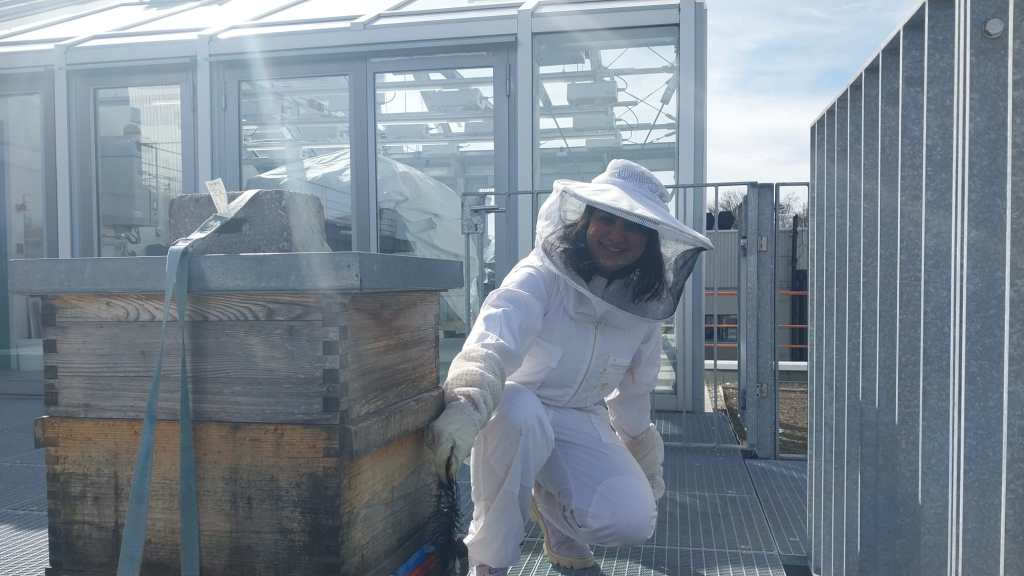
University of Konstanz
Soapbox: What motivates you to give a talk in Soapbox Science?
KK: I am only a PhD student and I have a long way to go, if I plan to pursue an academic career. But I love what I do and talking about my questions and get people thinking about my research topics. Broadly speaking, my research topic is on insects (mainly honeybees), their brains, the natural world they live in, and all the behaviors they do. Each time I talk about it to my family members or friends, I get a lot of questions and sometimes information that I don’t know. I enjoy these tiny real-science discussions and want to leave my audience with the fascination of the living world around us and asking more questions about it after they leave as well. Maybe this could draw interest to the young to study biology (quite similar to how I was drawn to it) or maybe just let them know that there are these fascinating research topics that scientists are also working on.
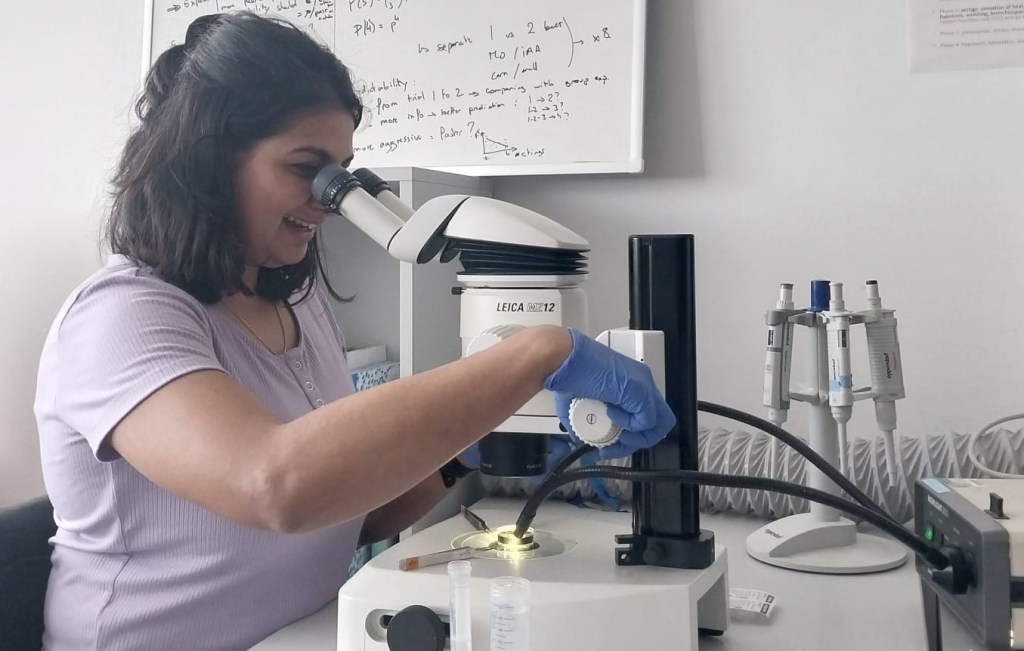
University of Konstanz
Soapbox: In these pandemic days, what funny/interesting experiments, books, talks or podcasts can you recommend to our audience?
KK: I enjoy the podcast called “Ologies” by Alie Ward, where she chats with a specialist from different fields (“-ology” means “the study of”). From listening to this, I have learnt so many interesting facts from several scientific and non-scientific subjects, directly from the voice of experts working in these fields. These “experts” are PIs or are research scientists who have recently completed their PhD or are PhD students themselves, similar to people whom I meet at the university. I vibe with their excitement and enthusiasm about their research, because it is similar to how I perceive mine.
Another science-y and funny podcast, where I learn new things and still have a hearty laugh is the “Infinite Monkey Cage” from BBC Radio 4, hosted by Brian Cox and Robin Ince.
I like these two podcasts as the hosts are entertaining and still very scientific and informative! I have been listening to them pre-, during, and now in the post-pandemic days!
 Soapbox Science Munich