Interview with Dr. Verónica Errasti Díez
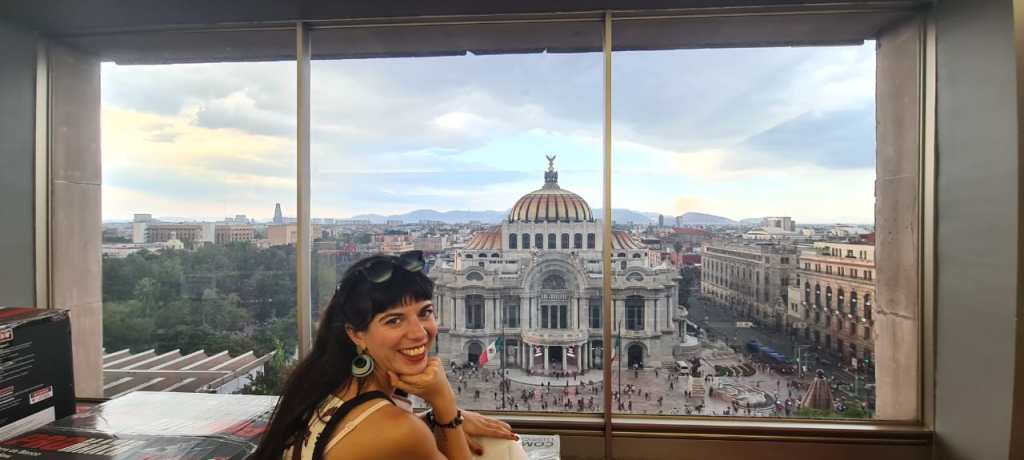
Ludwig-Maximilians-Universität München & Excellence Cluster ORIGINS
Soapbox: What do you think is the most fascinating aspect of your research/work? Can you share a memorable or rewarding moment from your career that illustrates the impact of scientific research on society?
Verónica Errasti Díez: As a theoretical physicist, there are those magic moments when I (even better, we: my
collaborators and myself) stare at an equation that no one else has seen before and that carries a
deep meaning about the universe… It is our little expansion of the horizons of human knowledge,
after many twists and turns, trials and errors. Those moments fill me with an indescribable strength
and motivation to continue work — and make me run to colleagues to share the news and gather
their insights!
Soapbox: What attracted you to Soapbox Science in the first place? Sum up your expectation of the Soapbox Event in three words.
VED: I am a regular contributor to outreach and the promotion of gender equity in academia.
Upon learning about Soapbox Science, which mixes the two, I could not resist and applied to be a
speaker right away! I hope (and will strive) for an event that will be interesting, insightful and
thought-provoking for those joining.
Soapbox: Do you have any fascinating do-it-at-home experiments, books, podcasts, or talks that you’d suggest for a good laugh or some interesting insights?
VED: I love reading in general, so I keep many books around me at all times. Currently, I am
reading “Papyrus” by Irene Vallejo, about the invention of books in the ancient world. Two of my
favorite books are “Life and fate” by Vasily Grossman, sometimes referred to as the “War and
Peace” of WWII, and “Memoirs of Hadrian” by Marguerite Yourcenar, which perfectly lives to its
name.
Soapbox: What role do you believe science communication plays in bridging the gap between researchers and the general public?
VED: Scientific research is a main driver of societal change — and it is partly supported by
taxpayers’ money! Therefore, in order to understand where we humans stand and so as to be able to
informedly take part in the open discussion as to where we want to head, basic science knowledge is
essential — it is also a right! However, communicating cutting-edge scientific ideas without too
many technicalities is, more often than not, a difficult task for researchers — and a task we hardly
ever get any preparation for! And that’s where science communication steps in, helping researchers
establish a fruitful discussion with the public. For example, the training workshop by Soapbox
Science is a great opportunity that I dearly look forward to!
Soapbox: What advice would you give to someone interested in pursuing a career in science, particularly young women who may be hesitant to enter the field?
VED: While I reckon it is not particularly invigorating to read this, I must wholeheartedly
recommend the careful compilation of all official documents in one’s scientific life: participation in
workshops, exchange studies, talks, etc. I wished I had understood early in my career just how
important and convenient this is! (I bet researchers reading my advice can only agree and laugh…)
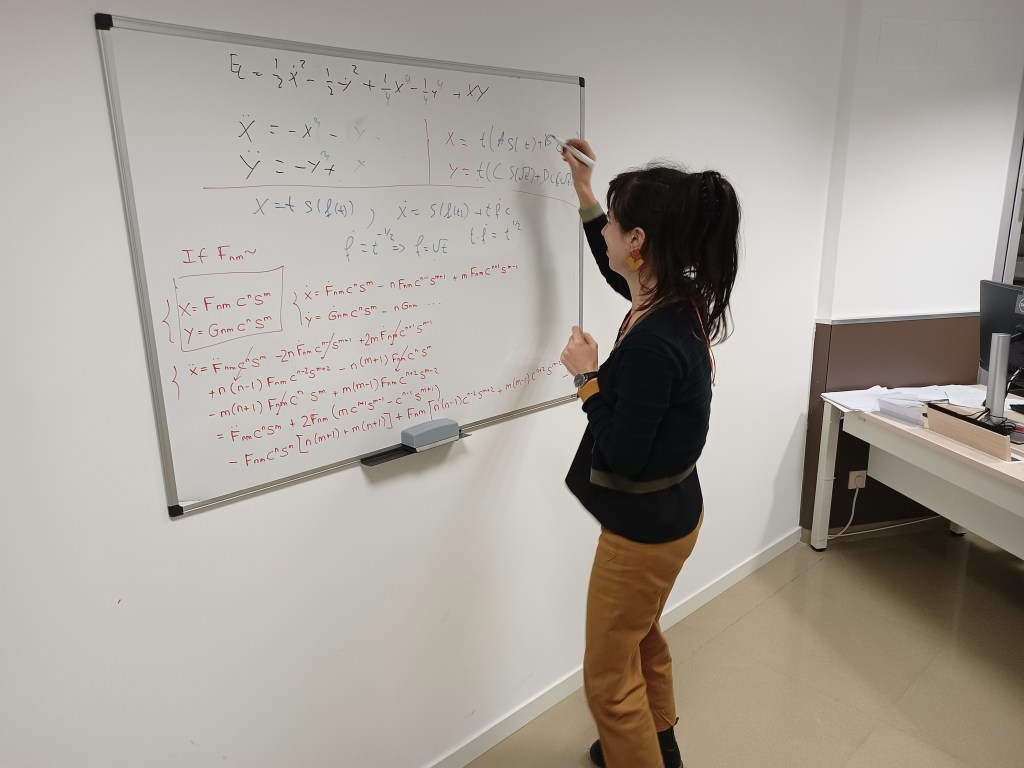
Ludwig-Maximilians-Universität München & Excellence Cluster ORIGINS
 Soapbox Science Munich