Interview with Sarah Wali, M.Sc.
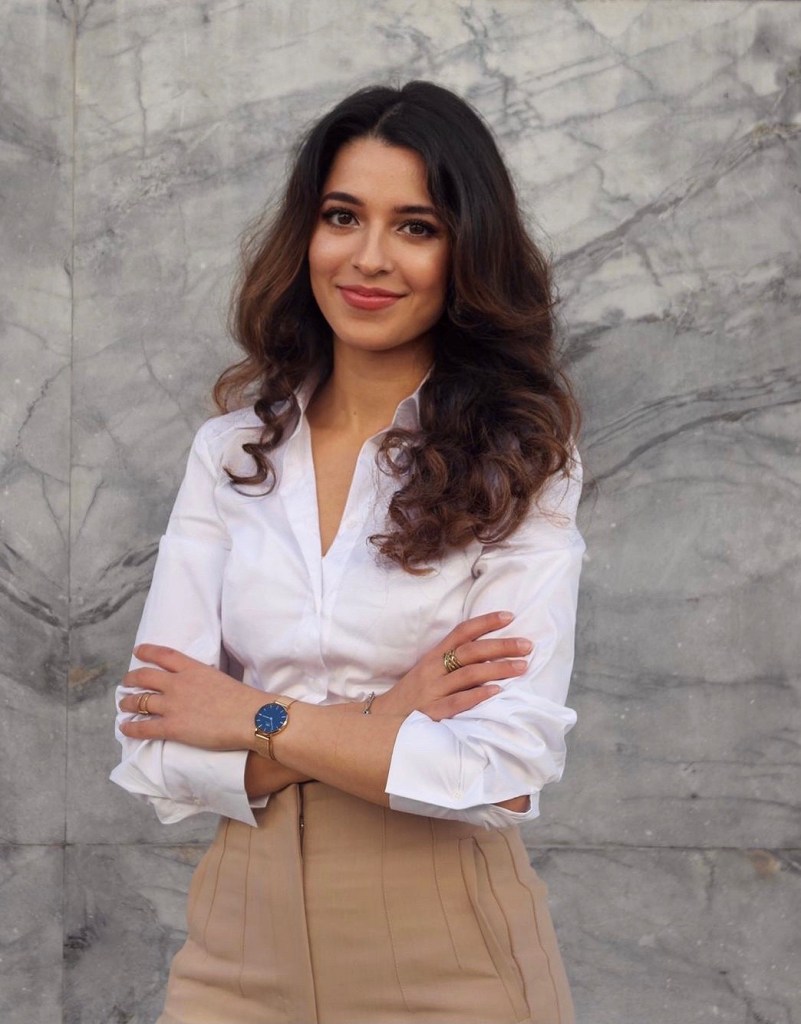
Technical University of Munich – Heinz-Nixdorf-Chair for Biomedical Electronics
Soapbox: Did you choose a scientific career or did the scientific career choose you? Can you tell us about your journey into the world of science and what inspired you to pursue your particular field?
Sarah Wali: Both 😊 I was always driven by impact. In elementary school, I postulated that I wanted to become a scientist. Why? Because science was and is simply fascinating. Asking myself how and why things work in a particular way, and deep dive into the vast field of unexplored things. Science, to me, feels like an adventure/quest. You don’t know what will happen next. Therefore, I followed my little kid instinct and chose a high school with a focus on natural science and tech. I loved to experiment around. My decision to become a Molecular Biotechnologist was simple: people told me I couldn’t do it, and it simply sounded interesting 😉
Soapbox: During your journey as a scientist, what challenges have you encountered along the way? And if you had the power to alter one (or more) aspect(s) of the scientific culture, what would you change and why?
SW: Being a very social person, the strict, hierarchical, and concurrency-thinking mindset scared me off for a while. People regularly work independently, and labs often have a toxic environment. However, that’s not the case anywhere! There are also very friendly environments; you only need to know what makes you happy and drives you for your scientific career. Professors or group leaders are often excellent scientists but not aware of the importance of empathic leadership; more awareness of that is crucial.
Another point is the need for more money. Many projects only run through self acquired grants. To get such a process through there are many and lengthy steps and a lot of burocracy until the project can start over. This needs to change.
Soapbox: What do you think is the most fascinating aspect of your research/work? Can you share a memorable or rewarding moment from your career that illustrates the impact of scientific research on society?
SW: The BugSense project can be attributed to the scientific approach of “applied science” (contrary to basic science). Therefore, results and applications can be seen faster. At our project, we not only do R&D but also need to consider all the other aspects required to place science into the market, e.g., IP, regulatory, etc. Additionally, personal growth is immense, not only in terms of hard skills but also in terms of soft skills such as self-organisation, self-reflection, and resilience. We are proud of all the awards we have won during our journey. However, the resonance we get from patients drives us more to continue and gives us validation that what we do is the right thing.
Soapbox: What attracted you to Soapbox Science in the first place? Sum up your expectation of the Soapbox Event in three words.
SW: Life should be a dialog – and that also applies for science + Women are mostly driving science but are not seen as much in the public.
Cool conversations. Fun. Curiosity.
Soapbox: What role do you believe science communication plays in bridging the gap between researchers and the general public?
SW: As mentioned before, dialogue is necessary for any aspect of life, whether between cultures, hierarchies, or ages. Especially during COVID-19, we saw how necessary it is to communicate. It’s challenging for scientists to explain complex things in easy language to maintain trust. The General Public needs to understand why certain things require a long time in science so there is a mutual understanding of asks and needs.
Soapbox: What misconceptions do you think people often have about scientists, and how do you aim to change those perceptions?
SW: In my environment, the perception of scientists/science is either very positive or, at the same time, negative. In movies, nerdy scientists want to get power over the world after researching in a dark lab and trying to create the next Frankenstein monster. A different narrative in media could help to open the dialogue. 🙂 We surely aren’t that scary.
Soapbox: How do you think diversity and inclusion in the scientific community contribute to innovation and progress?
SW: Several reports state that diversity and inclusion lead to better performance, results, success, and sustainability. Diversity should not be specific to any field; rather, it should be a general societal concept. We can achieve this by telling a different narrative to our children. “You can’t do this because you are a boy/girl” should be stopped to encourage children to try out a profession not typical for their gender. Automatically, many biases can be eradicated.
Diversity and inclusion also bring in challenges, which should not be ignored. Different cultures communicate differently, older people tend to work differently, or people come in with different values. An early alignment can overcome this challenge early, not only for a science-based constellation.
Soapbox: What advice would you give to someone interested in pursuing a career in science, particularly young women who may be hesitant to enter the field?
SW: A study indicated that 84% of young women do not pursue a career because they lack female role models. From the perspective of society, we must place more role models from all fields into the public—”Sciencefluencers.” These days, there are many programs before studying or starting a job during high school. I, for example, participated in the “Chemie Schnupperstudium,” a university program for two weeks, giving insights into student life with lectures and practical courses. I would encourage everybody to do so!
Soapbox: What is your day-to-day scientific-superpower and how does it help you with your work?
SW: Believe it or not – cleaning properly 😀 In a microbiological lab its essential to keep all your material and environment sterile – thanks mum!

Technical University of Munich – Heinz-Nixdorf-Chair for Biomedical Electronics
Soapbox: If you were to embark on a Robinson Crusoe-style adventure and ended up on a deserted island, which scientific gadgets or gizmos would turn your survival into a scientific escapade?
SW: Just hope this doesn’t happen haha – but one of the things would be Li, Na, K. Those could help after reacting with water to show planes where I am.
Soapbox: Do you have any fascinating do-it-at-home experiments, books, podcasts, or talks that you’d suggest for a good laugh or some interesting insights?
SW: Since I am into neuro the Andrew Huberman Podcast is a must + Well that’s interesting JillChaCha Podcast.
You can connect with Sarah on LinkedIn or Instagram.
 Soapbox Science Munich