Mathematical models: when maths meets the real world by Dr. Cinzia Soresina
I travel a lot for work and above all I have lived in many European countries in recent years (Italy, Portugal, France, Germany, Denmark and Austria so far!). But regardless of people’s nationality, gender, age, and education, I have often been told:
“I have never understood anything about mathematics!”
University of Trento, Italy
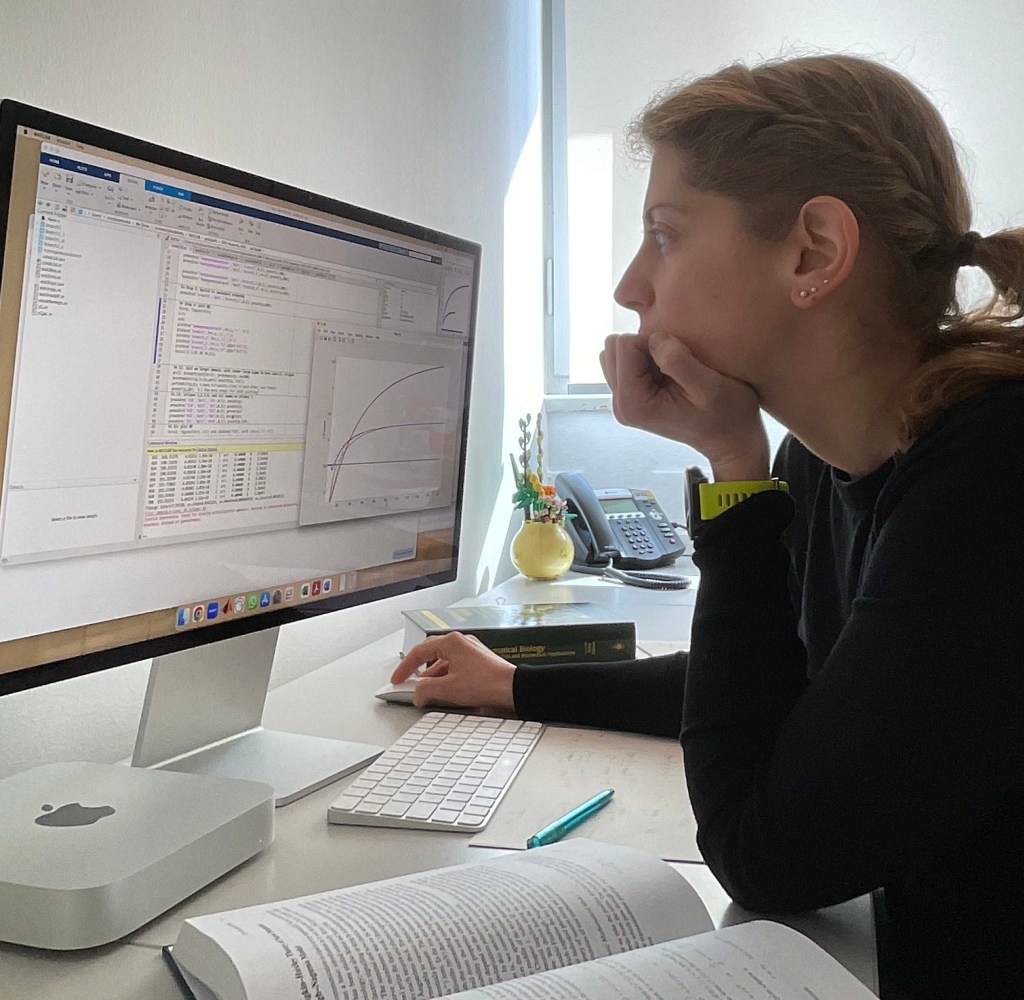
So let me say that I feel I begin at a little bit of a disadvantage compared to other disciplines here at SoapboxScience. I don’t have distant galaxies to show you, amazing chemical reactions, cutting-edge materials, or bio-engineering achievements. I don’t spend my days in a lab doing dangerous experiments or collecting data in the field (unfortunately, you don’t know how much I would love to!). Apart from the time dedicated to teaching, my research work in mathematics takes place mainly in my office with a view of the Trentino mountains, alternating more theoretical phases (done with pen and paper) with numerical computer simulations, but also collaborating with non-mathematicians from time to time.
But of what, you may be wondering?
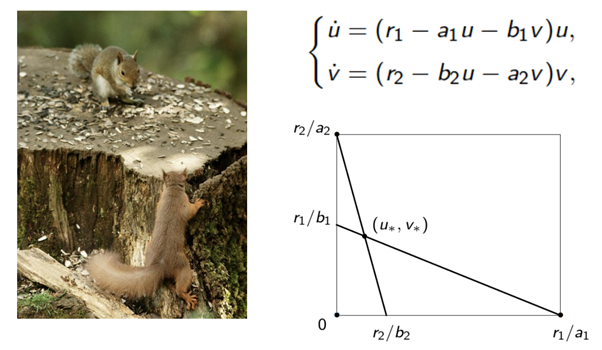
I am passionate about mathematical models, especially those with applications in biology in a broad sense. A mathematical model can be viewed as the description of a natural phenomenon in a mathematical language. This is really the meeting point between abstractive mathematics and the real world. Thanks to mathematical models we can describe, investigate and better understand cell movements, animal species interactions, diseases’ spreading, opinion formation, crowd dynamics, traffic flows, heart physiology, vegetation patterns, and many many others. Through numerical computer simulations, we can make and repeat “experiments” of complex systems without actually having to do them in the real world (e.g. we would certainly not want to have to do experiments on the spread of infectious diseases!). We can make predictions, test different strategies and scenarios, and support decisions. Amazing, isn’t it?!?
University of Trento, Italy
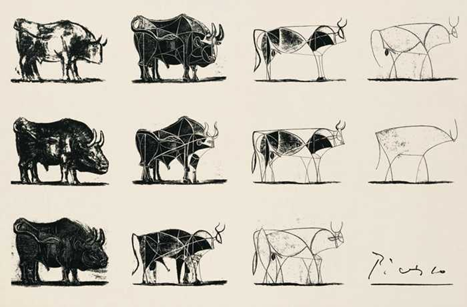
A mathematical modeller must have a solid background in mathematics but also be passionate about other sciences, such as ecology or biology, and above all be able to communicate with experts from other disciplines. I assure you that this is the hardest part, not the mathematics itself! For example, we mathematicians often tend to simplify the problem in order to be able to ‘treat’ it, study it and solve it. But this can lead to a too-simplified scenario compared to the real-world phenomenon. The key here is to keep what we can not ignore, and discard all the rest, to find a balance between tractability and realism, between simplicity and complexity. I like to compare this process to Picasso’s bulls, a bit of art also in maths.
I would like to show you this applied side of mathematics that has always fascinated and still fascinates me. I would like to show you how it is possible to translate (almost) anything into mathematical language and how mathematics can provide useful tools in so many more applied areas.
For one afternoon, I would like you to look at the real world through the eyes of a mathematician who is passionate about applications.
 Soapbox Science Munich