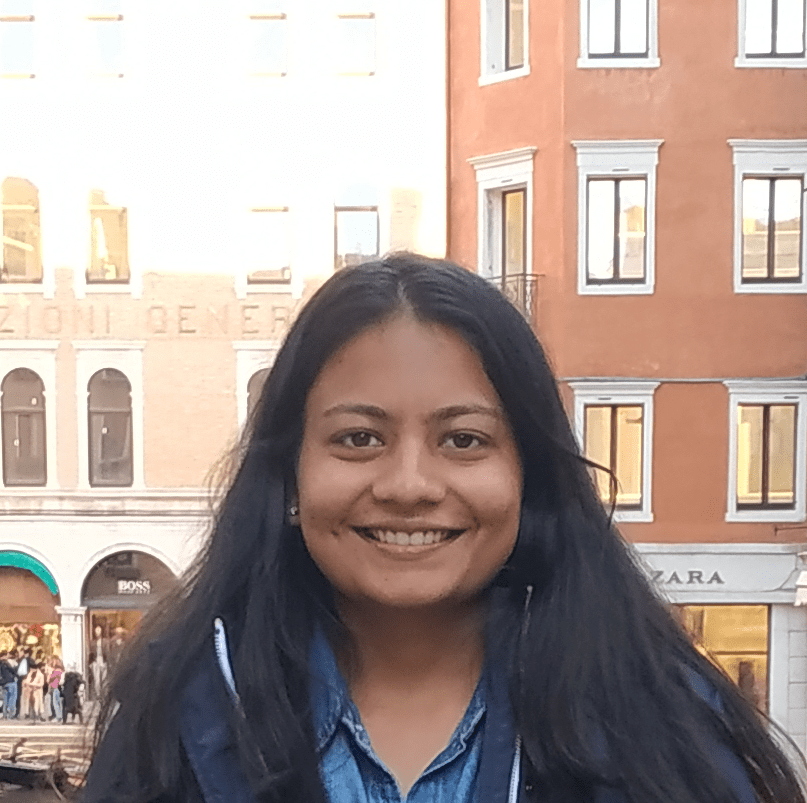
Friend or foe? When our immune system attacks our brain
– Interview with Shreeya Kedia
Technical University of Munich
Soapbox: During your journey as a scientist, what challenges have you encountered along the way? And if you had the power to alter one (or more) aspect(s) of the scientific culture, what would you change and why?
Shreeya Kedia: Science as a profession is super competitive and sometimes with an unhealthy work life balance with long working hours. Additionally, academia has a “publish or perish” environment adding extra pressure on scientists. Most scientists especially early career scientists have temporary contracts which further adds professional uncertainty. I feel this needs to change in order to make the profession more sustainable and attract more people. Flexible working hours, a more supportive environment, better work-life boundaries and more mental health support will go a long way.
Soapbox: What attracted you to Soapbox Science in the first place? Sum up your expectation of the Soapbox Event in three words.
Shreeya: I feel science communication events like Soapbox Science offer an excellent platform to bridge the gap between scientists and general public. Presenting science in a clear and accessible way empowers people of all ages and backgrounds. Now more than ever, we need programs that make science understandable and accessible to everyone. I feel that helping people grasp current research promotes trust in science, combats misinformation, and encourages greater public engagement in important scientific issues.
Three words to describe the Soapbox Event: Inclusive, informative and inspiring!
Soapbox: How do you think diversity and inclusion in the scientific community contribute to innovation and progress?
Shreeya: Science is all about innovation and creativity. People with different backgrounds bring different perspectives and view points on the table. Additionally, I feel that diversity and inclusion might be the key to address global scientific challenges. For example, historically a lot of clinical trials have been disproportionally done on Caucasian males. How different drugs impact women or people with different racial backgrounds is still understudied. Having a diverse and inclusive scientific community forces scientists to think about these questions and hopefully one day solve them.
Soapbox: What advice would you give to someone interested in pursuing a career in science, particularly young women who may be hesitant to enter the field?
Shreeya: Science opens doors to a lot of career options. Research careers, science education and communication, health care professionals, a career in applied sciences are some of the many many options available. I feel a scientific career is not “one glove fits all”. I would encourage people entering the field to start small and find their passion, find what works and what does not work for you. A career in science can sometimes feel intimidating and challenging. Start small, take a few extra science courses, work in a lab and explore all the options you have.
Soapbox: If you were to embark on a Robinson Crusoe-style adventure and ended up on a deserted island, which scientific gadgets or gizmos would turn your survival into a scientific escapade?
Shreeya: A microscope. Will it help me survive? Probably not. But at least I could look at pretty things.
You can connect with Shreeya on Instagram.
 Soapbox Science Munich