More Than What You Eat: How Early Life Nutrition Shapes Your Health
by Sophie Münch

Helmholtz Zentrum Munich
In recent years we have seen a rise in diseases related to metabolic health, such as diabetes and obesity. While poor nutrition and inactive lifestyle choices, for example a lack of exercise, are commonly seen as the main reason for this, an interesting question still remains: why do some people struggle with weight and disease despite leading a healthy lifestyle?
We have all heard the phrase “You are what you eat”. But what if your health is not only shaped by your own food choices? What if your parents – and perhaps even your grandparents – food choices also have an effect on your health and disease status today?
Metabolic Programming
This might sound difficult to believe – but this is the idea of a growing field of science called ‘Metabolic Programming’. Studying this phenomenon, us researchers focus on understanding how nutrition and food choices, especially during early life, can have long-lasting effects on metabolism and the risk of developing metabolic diseases like obesity and diabetes. But this is not all. We also study how these effects are passed on to the next generation.
Metabolic Programming suggests that nutrition, especially during critical time points such as pregnancy and infancy, can ‘program’ how our bodies respond to and process different dietary choices. For example, if a baby does not get enough nutrients from its parent during pregnancy, this can influence how their body and their metabolism develops and therefore lead to an increased risk to develop health problems later on in life.
Helmholtz Zentrum Munich
The Dutch Hunger Winter
During the winter of 1944-1945, western regions of the Netherlands were struck by a severe famine due to withheld food supplies and imports during World War II by the German occupier. The population lived on a daily ration of 400-800 calories per person for 6 months, including of course pregnant women and children, until the country was liberated on May 5th, 1945.
This tragic event provided a rare change to investigate the effects undernutrition and starvation has on human health later in life. Studies have shown that children, who were still in the womb while their mothers had experienced this famine, suffered from long-term health problems. They were found to have a higher risk of developing for example coronary heart disease, obesity and breast cancer, as well psychological disorders, such as anxiety and depression.
This is a powerful example how the lack of food during pregnancy and early-life nutrition can have long-lasting effects on future generations and their health, showing us that there is a fundamental importance to the dietary choices that we make (1).
Tiny Worms, Big Achievements
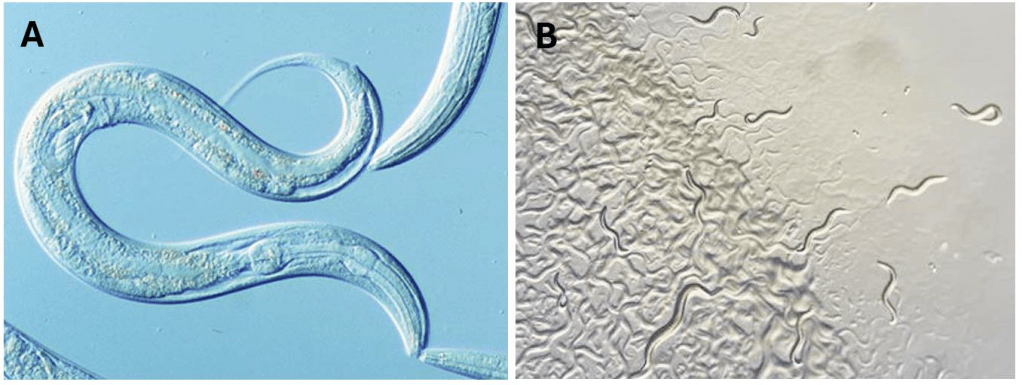
By using a simple organism called C. elegans, I am able to study the underlying mechanisms of Metabolic Programming. C. elegans are transparent, microscopic worms. At first glance it seems to not have a lot in common with humans. However, approximately 60-80% of their genes have counterparts in humans, making them surprisingly useful to study and understand biological processes, such as how metabolism and diseases work.
Communicating science and spreading awareness about topics like this in an engaging way can influence the way we think health and preventing disease. It can help us to move beyond understanding the basics to also appreciate the science behind our health and our bodies – empowering us to make informed choices for ourselves and for future generations.
(1) Bleker LS, de Rooij SR, Painter RC, et al. Cohort profile: the Dutch famine birth cohort (DFBC)— a prospective birth cohort study in the Netherlands. BMJ Open 2021;11:e042078. doi:10.1136/ bmjopen-2020-042078
 Soapbox Science Munich