Your body clock has a light switch
– Interview with Niloufar Tabandeh Saravi

Technical University of Munich, TUM
Soapbox: Did you choose a scientific career or did the scientific career choose you? Can you tell us about your journey into the world of science and what inspired you to pursue your particular field?
Niloufar Tabandeh Saravi: I don’t think I ever really chose science; it sort of adopted me early on. I was about five when I confidently announced I’d be a scientist, and I never really changed my mind. I grew up in a science-loving family, so curiosity felt very natural. I started with physics, fascinated by how the world around us works. Later on, I was drawn to the human brain – the complex world inside us – which led me into neuroscience. Along the way, despite the challenges, curiosity and a drive to discover the unknown have always kept me going.
Soapbox: During your journey as a scientist, what challenges have you encountered along the way? And if you had the power to alter one (or more) aspect(s) of the scientific culture, what would you change and why?
Niloufar: One of the biggest challenges isn’t the science; it’s the uncertainty of the career. As you move forward, most positions are temporary, and you often have to relocate. That puts pressure on finances and family life, and it can be especially hard for women in science. I’ve gone through this myself, and it’s still a challenge. If I could change one thing, I’d make careers in science more stable, so people can focus on doing good science without always worrying about what comes next.
Soapbox: What role do you believe science communication plays in bridging the gap between researchers and the general public?
Niloufar: Science communication is essential for bridging that gap. Today, people are often exposed to misleading headlines or oversimplified messages that can lead to exaggerated – or even wrong – conclusions and advice, sometimes doing more harm than good. When scientists explain their work in clear, simple language, it builds trust and helps people understand what the science actually says, and what it doesn’t.
Soapbox: What misconceptions do you think people often have about scientists, and how do you aim to change those perceptions?
Niloufar: With social media and the overwhelming flow of information, people often look for quick and simple answers. But science doesn’t really work like that; it’s slow, changing, and built step by step. There are still many things we don’t know. At the same time, people sometimes expect scientists to have all the answers in their field, which isn’t realistic. I think it’s important to be open about uncertainty and to clearly separate what we know, what we think we know, and what we’re still trying to understand.
Soapbox: What is your day-to-day scientific-superpower and how does it help you with your work?
Niloufar: My “superpower” is actually quite simple. I try to live by my own science. As a chronobiologist, I pay attention to daylight, sleep, and daily rhythms, and I shape my routine around them. It sounds small, but light is a powerful signal for the body. When you start noticing it, you realize how much it affects your energy, mood, and focus. So in a way, I don’t just study biological clocks, I try to listen to mine.
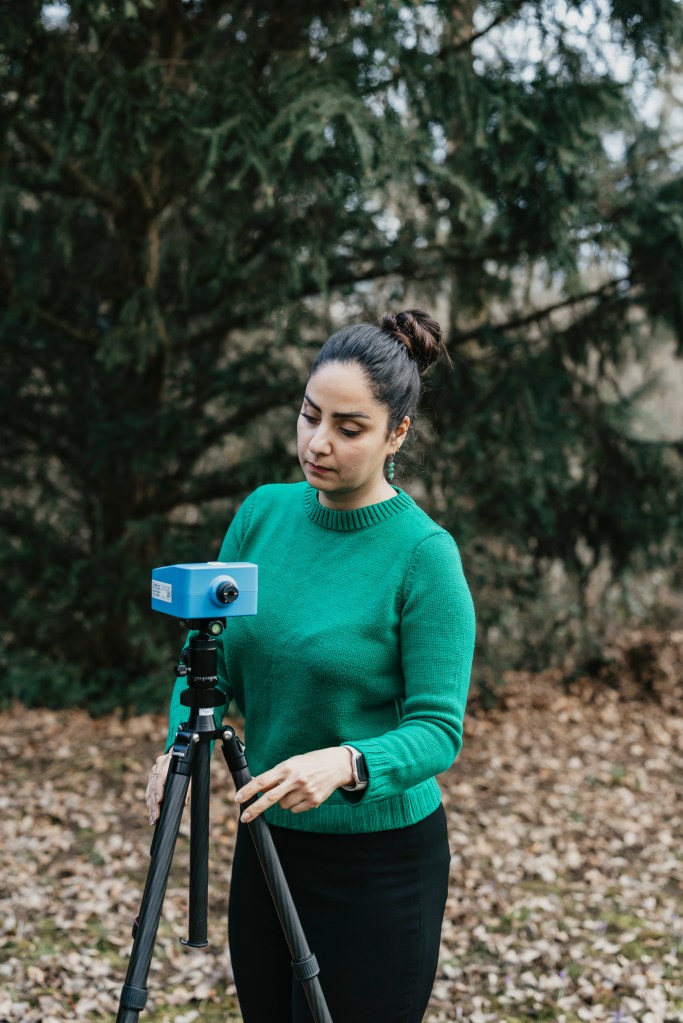
Technical University of Munich, TUM
You can connect with Niloufar on LinkedIn.

