From One Cell to One Chance: How AI Predicts Who Survives Heart Failure
– Interview with Bhavishya Nelakuditi
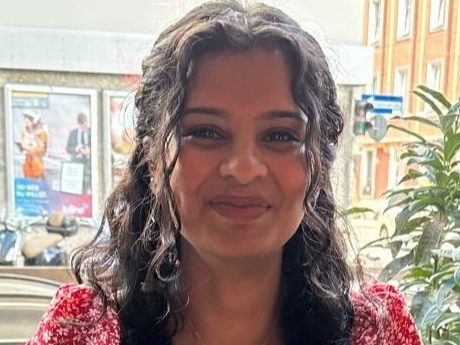
LMU Klinikum and Helmholtz Munich
Soapbox: What is your day-to-day scientific-superpower and how does it help you with your work?
Bhavishya Nelakuditi (Visha): Always being curious. I’m curious about the world, how stuff works, and about everything around me. It helps me learn new things and approach challenges as puzzles to solve.
Soapbox: Did you choose a scientific career or did the scientific career choose you? Can you tell us about your journey into the world of science and what inspired you to pursue your particular field?
Visha: I have always wanted to help people, and biology fascinated me. There’s so much we still don’t know about our own bodies! I wanted to be at the forefront of fighting germs and solving diseases. I told my parents that I wanted to be a scientist (among other things) at the age of 13, and lo and behold, I made it come true! Science stuck with me throughout my life.
Soapbox: During your journey as a scientist, what challenges have you encountered along the way? And if you had the power to alter one (or more) aspect(s) of the scientific culture, what would you change and why?
Visha: I was a bit disillusioned about the impact of scientific research when I started my PhD. Not every research idea would be groundbreaking, but that’s okay. Because groundbreaking research doesn’t happen on a whim, it builds on decades of research compiled by hundreds of scientists. You’re part of the bigger picture!
The main challenge in science for me is the lack of transparency. 90% of research that fails never gets published. It is equally important to publish failures as well as successes because it gives other scientists opportunities to try new things and learn from mistakes, rather than wasting time and resources on something that’s already been done. This way, we all grow!
Soapbox: What do you think is the most fascinating aspect of your research/work? Can you share a memorable or rewarding moment from your career that illustrates the impact of scientific research on society?
Visha: I work on understanding how different immune cells in our body act together to fight a disease. As a scientist, you sometimes get lost in the little details like selecting software, trying new methods, etc., and you lose sight of the big picture. It was life-altering when my supervisor took me to the ICU to show me the patients for whom we were doing all of our research. To help people live and improve their quality of life. It made me grounded in the actual problem.
Soapbox: What advice would you give to someone interested in pursuing a career in
science, particularly young women who may be hesitant to enter the field?
Visha: Have a passion for science, be curious, and always be open to trying new things. Replace hesitancy with curiosity. And never do a one-year master’s program, no matter how cool it sounds!
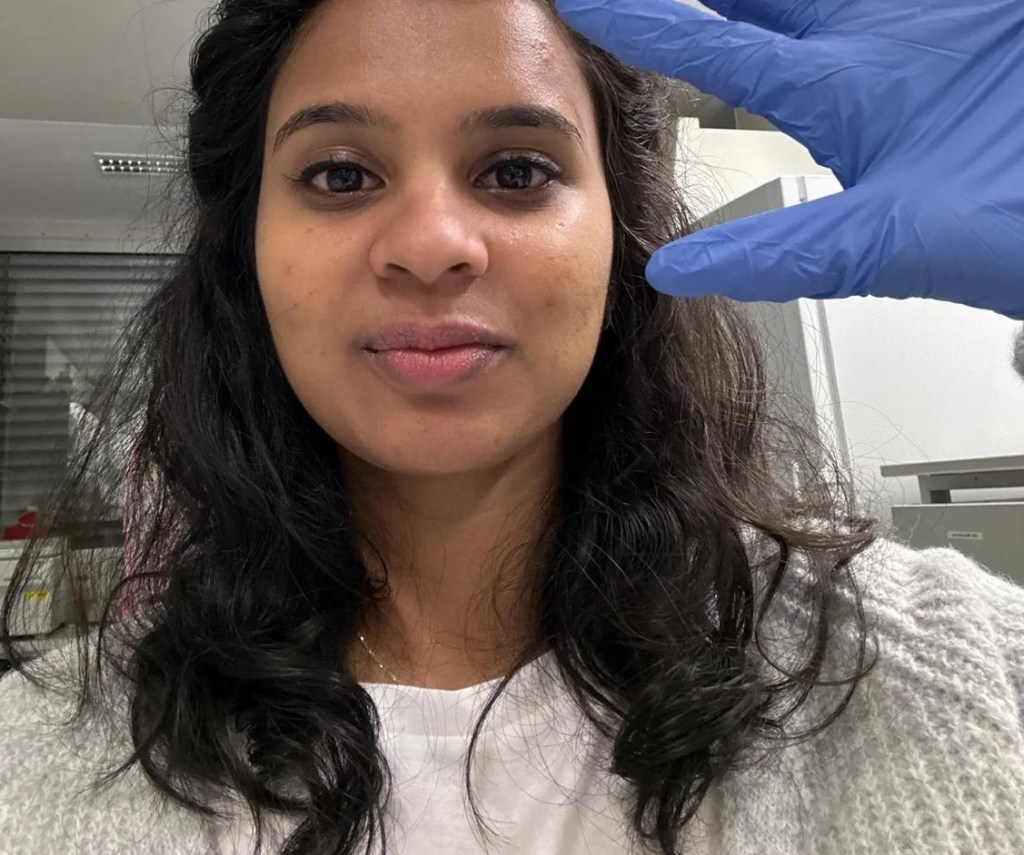
LMU Klinikum and Helmholtz Munich
You can connect with Visha on LinkedIn.

