What if leaves could produce car fuel
– Interview with Dr. Maria Ferree
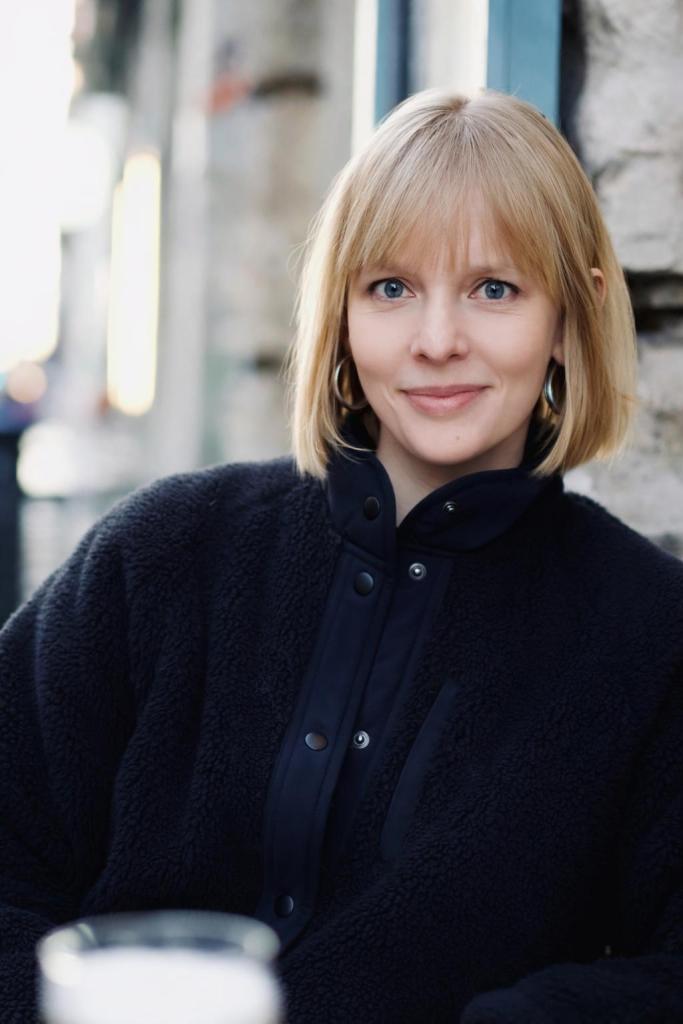
LMU Department of Physical Chemistry
Soapbox: Did you choose a scientific career or did the scientific career choose you? Can you tell us about your journey into the world of science and what inspired you to pursue your particular field?
Maria Ferree: I think science chose me in the end. I never dreamed of doing research. As a child, I wanted to be a pianist, and then later, in high school, I was training to become a doctor. After 2 years in medical college, I thought that being a medical doctor was too hard. My friend suggested, “Why don’t you try chemistry?” So, I tried and enjoyed it. I obtained a Master’s degree in Analytical Chemistry at Lomonosov Moscow State University in Russia.
Then someone I met at a conference said, “Why don’t you join us in Saudi Arabia, at KAUST, and get a PhD degree?” Well, why not, right? So, I did my PhD in renewable energy and solar fuels in Saudi Arabia.
After completing my PhD, my supervisor suggested, “Why don’t you come to Munich and help me build a new lab?” I thought Munich sounded fun, and building a lab from scratch was a welcome challenge. So, again, I agreed.
Looking back, I have been lucky enough to get offered exciting academic positions, and I did not think twice before accepting them. Now I am not a medical doctor, but still a Dr., enjoying the Bavarian Alps.
Soapbox: During your journey as a scientist, what challenges have you encountered along the way? And if you had the power to alter one (or more) aspect(s) of the scientific culture, what would you change and why?
Maria: Often, in research, especially when pursuing a doctorate, there is a very fine line between being a student and being an employee. You are called “PhD student”, you are still at university, yet you have a contract, a salary, deadlines, and responsibilities. Many PhD students struggle to identify their role and set clear boundaries with colleagues, superiors, and with the job itself.
I do consider doctoral research a job, and I believe that institutions should see it that way. Scientific culture often normalises overtime work, odd hours, and blurry boundaries between work responsibilities and personal life. But just like in any other profession, overtime should be compensated, and the boundaries during those breaks should be respected.
PhD researchers are among people with the highest risk of depression, burnout, and exhaustion. Treating PhD researchers as employees rather than students would significantly improve their well-being, and therefore, boost productivity, creativity, and help them maintain that excitement about science.
Soapbox: What attracted you to Soapbox Science in the first place? Sum up your expectation of the Soapbox Event in three words.
Maria: Inclusive. Inspiring. Real.
Science is not about geniuses working on incomprehensible problems. Soapbox is a great opportunity to show that researchers work on relevant, real-life problems and that science is accessible to all. It is a chance to explain in simple terms why and how scientific research can be helpful and impactful for everyone.
Additionally, the best way to deepen your understanding of something is to explain it to others and get feedback. I am sure I will have as much to learn from the audience as they will from me.
Soapbox: What misconceptions do you think people often have about scientists, and how do you aim to change those perceptions?
Maria: A common misconception is that scientists must be exceptionally smart. That is not entirely true. You need to be as equally curious, patient, and resilient as intelligent. You also need a structured, systematic mind to solve puzzles.
Often, it is not about how smart you are, but how stubborn and persistent you are. In fact, daily in the lab, you feel like a complete idiot, no matter whether you are a student or have 10 years of experience – things never work as you expect them or don’t work at all. As a successful scientist, you need to embrace this feeling and use it as the driving force.
Now, as a Postdoc, I supervise students at different stages of their academic journey, from BSc to PhD. I am trying to show my students that even though science can be extremely frustrating and demanding, it is also exciting and rewarding. And, importantly, it is not for a selected few – anyone can find their place in it.
In the end, we are all still learning.
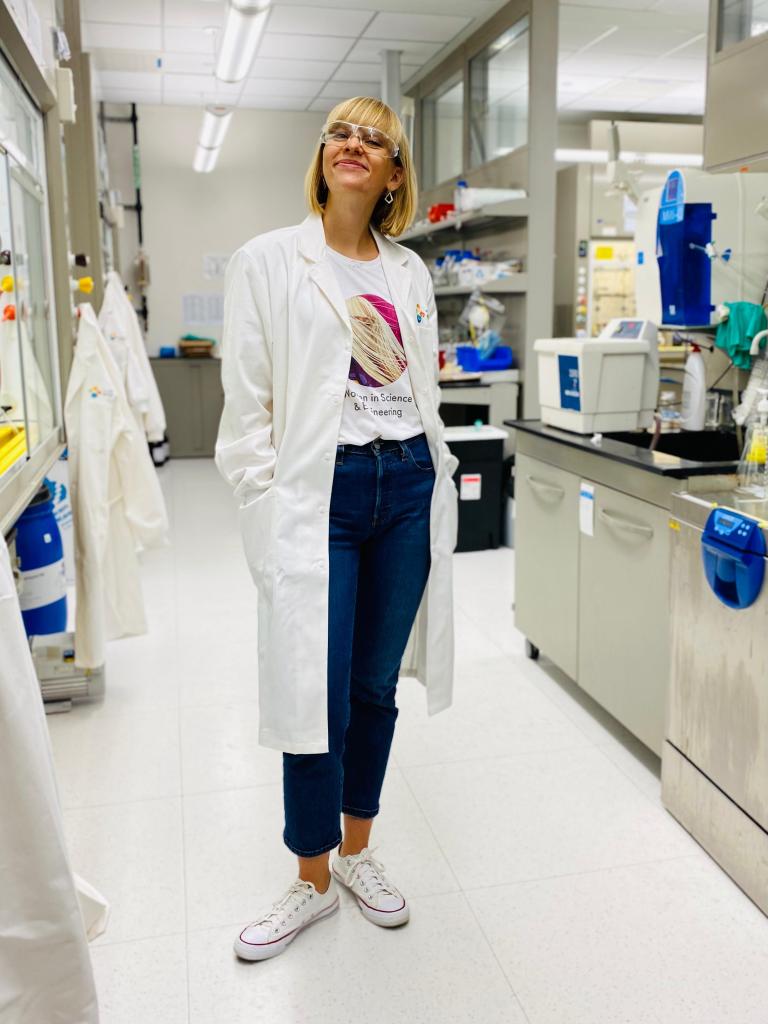
LMU Department of Physical Chemistry
Soapbox: What is your day-to-day scientific-superpower and how does it help you with your work?
Maria: One is scepticism! I don’t immediately trust experimental results, especially my own, especially promising ones. It might sound pessimistic, but it is actually helpful in verifying data reproducibility and improving the quality of my work.
The second superpower is controlled stubbornness. Researchers tend to obsess over their ideas and force them to work for weeks, months or even years. But this stubbornness must be balanced with the ability to let go. I’ve learned when to push forward and when to step back, and that saves a lot of time and frustration.

