Shhh … birds are speaking
– Interview with Lisa-Marie Livancic
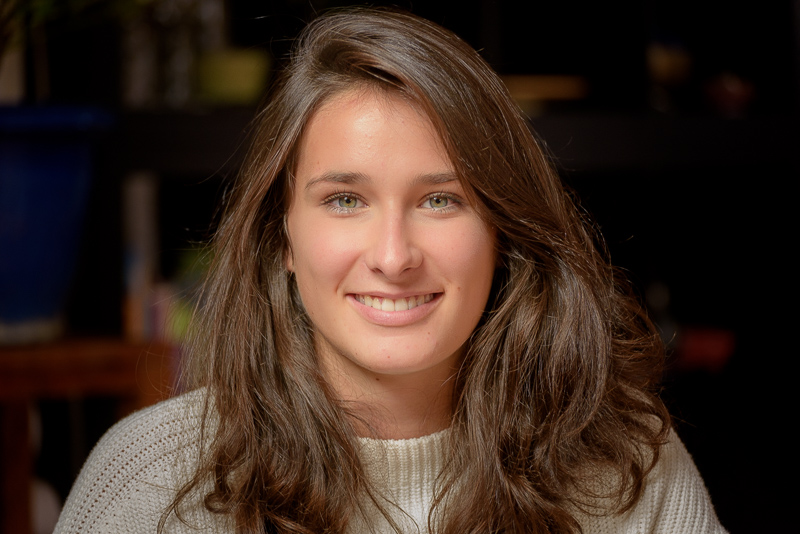
Max Planck Institute for Biological Intelligence
Soapbox: Did you choose a scientific career or did the scientific career choose you? Can you tell us about your journey into the world of science and what inspired you to pursue your particular field?
Lisa Marie Livancic: Honestly, I sometimes feel like science made that decision for me before I had fully agreed to it myself. When I started my bachelor’s in Biology, I was absolutely convinced that after three years I would be done with university and move on. But then I actually enjoyed it more than expected, so I stayed and started a master’s in Ecology, Evolution and Systematics.
During my master’s, the same thing happened again. A lot of people around me were already saying, “Of course I’ll do a PhD,” while I was still thinking, “No, that definitely sounds like something other people do, not me.”
Then, shortly before finishing my master’s, my bachelor’s thesis supervisor came to me and said she had funding for a PhD project and would be happy if I joined her lab. I honestly had to think about it for a while, because a PhD had never really been part of my grand life plan. But the project sounded genuinely exciting, I already knew the lab, I liked the methods, and I had really enjoyed working there before.
And then there was the fieldwork in Australia and South Africa, which, to be honest, made saying no even harder. At some point I thought: well, what could possibly happen? Let’s just do it.
Looking back, I’m very glad I said yes, because now I can’t really imagine having chosen a different path. The PhD journey has opened a lot of doors, given me opportunities I never expected, and apparently taught me that my “definitely not” often turns into “actually, why not?”
Soapbox: During your journey as a scientist, what challenges have you encountered along the way? And if you had the power to alter one (or more) aspect(s) of the scientific culture, what would you change and why?
Lisa Marie: One challenge I see quite strongly in academia is the uncertainty that comes with short-term contracts and short funding periods, especially early in a scientific career. It often feels like you are expected to plan excellent long-term research while at the same time not really knowing where you yourself will be in one or two years.
For field-based research, this can be particularly difficult because good field projects need time. You need to identify the right study area, build local collaborations, organize logistics, and sometimes simply wait until conditions are right – including, ideally, that the animals you want to study actually cooperate.
That kind of work does not always fit well into short grant cycles, even though it is often exactly this long-term investment that leads to strong and meaningful data. If I could change one thing, I would create more room for longer-term planning in science, because otherwise important parts of field research become very difficult to maintain.
Soapbox: What attracted you to Soapbox Science in the first place? Sum up your expectation of the Soapbox Event in three words.
Lisa Marie: What attracted me to Soapbox Science in the first place is that I have always been very interested in science communication. I really enjoy the idea of taking research out of the academic bubble and making it accessible, engaging, and hopefully exciting for people who would normally never come across it. For me, Soapbox Science feels like the perfect format for that, because it creates direct conversations with people who may not even realize at first that they are interested in your topic.
I also really value that the event specifically supports women in science, because although a lot has improved, there is still a lot of work to do when it comes to visibility, representation, and opportunities for women in academia. Events like this help make female scientists more visible and normalize the idea that science is a place where women belong and lead.
My expectations in three words: interactive, engaging, and memorable.
Soapbox: What role do you believe science communication plays in bridging the gap between researchers and the general public?
Lisa Marie: I think science communication plays a very important role because it helps make research accessible beyond the scientific community. A lot of the work we do happens in a very specialized environment, with its own language and structures, and without communication there is a real risk that valuable knowledge stays within that bubble.
Good science communication creates a connection between researchers and the public by showing not only results, but also why research matters, how it works, and why sometimes it takes time. It also gives people the chance to ask questions directly, which makes science feel less distant and much more approachable.
Soapbox: How do you think diversity and inclusion in the scientific community contribute to innovation and progress?
Lisa Marie: I think diversity and inclusion are extremely important for science because good research benefits from different perspectives, experiences, and ways of thinking. People with different backgrounds often ask different questions, notice different things, or approach problems in ways that others might not have considered, and that naturally strengthens innovation.
At the same time, inclusion is just as important, because diversity only really works if people feel able to contribute openly and are taken seriously. Science depends on critical discussion and new ideas, so the more voices are genuinely part of that process, the better the science becomes.
I also think it matters beyond the research itself, because science should reflect the society it serves. If more people can see themselves represented in science, it becomes easier to imagine science as something they can also be part of.
Soapbox: What advice would you give to someone interested in pursuing a career in science, particularly young women who may be hesitant to enter the field?
Lisa Marie: I think my main advice would be not to feel like you need to have everything planned from the beginning. At least in my case, many important steps happened a bit unexpectedly, and saying yes to opportunities I had not originally planned for turned out to be very valuable.
For young women especially, I would say not to be discouraged by the feeling that you have to fit a certain image to belong in science, because there is no single type of person who becomes a scientist. And I think it is important to remember that uncertainty is completely normal. Most people in science have moments where they doubt themselves, but that does not mean they are in the wrong place.
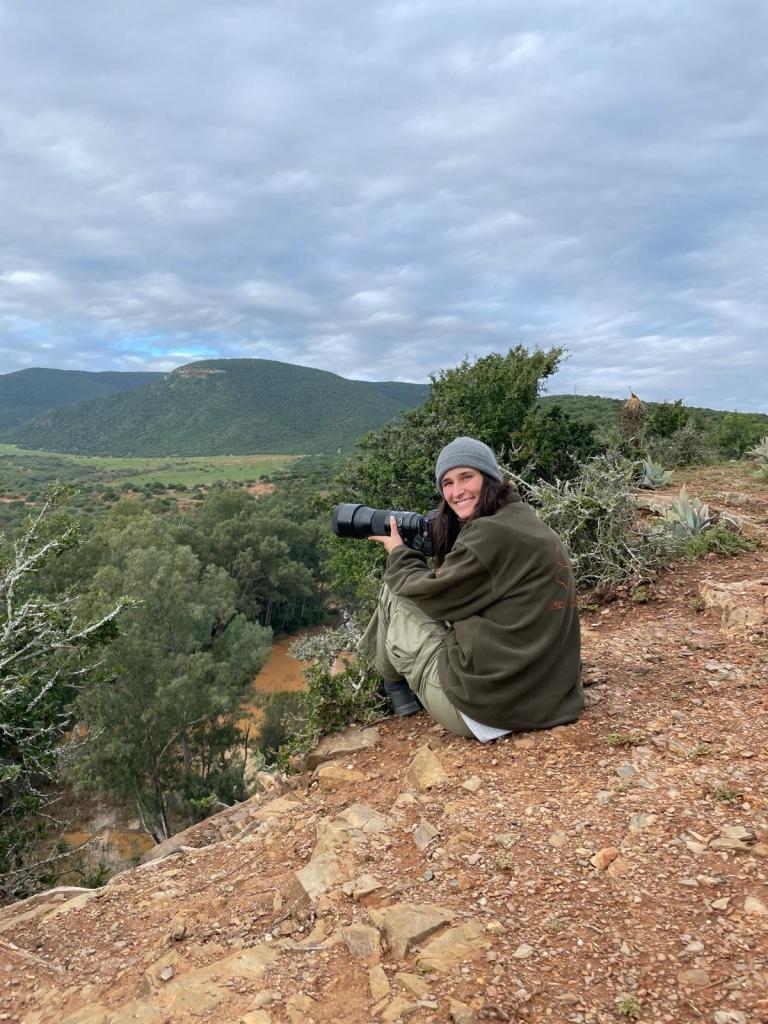
Max Planck Institute for Biological Intelligence
Soapbox: What is your day-to-day scientific-superpower and how does it help you with your work?
Lisa Marie: I wish my scientific superpower was patience – and fieldwork with animals has been teaching me just that, whether I like it or not. At the start, I definitely didn’t have much patience, but over time I adapted, mostly because animals have taught me very clearly that they are not interested in my timeline. You need to plan, wait for the right conditions, adapt when things go differently than expected, and sometimes accept that a whole day may pass without much happening at all.
 Soapbox Science Munich