Science Is Not Magic – It’s Curiosity
– by Mara Schilling-Wilhelmi
FSU Jena
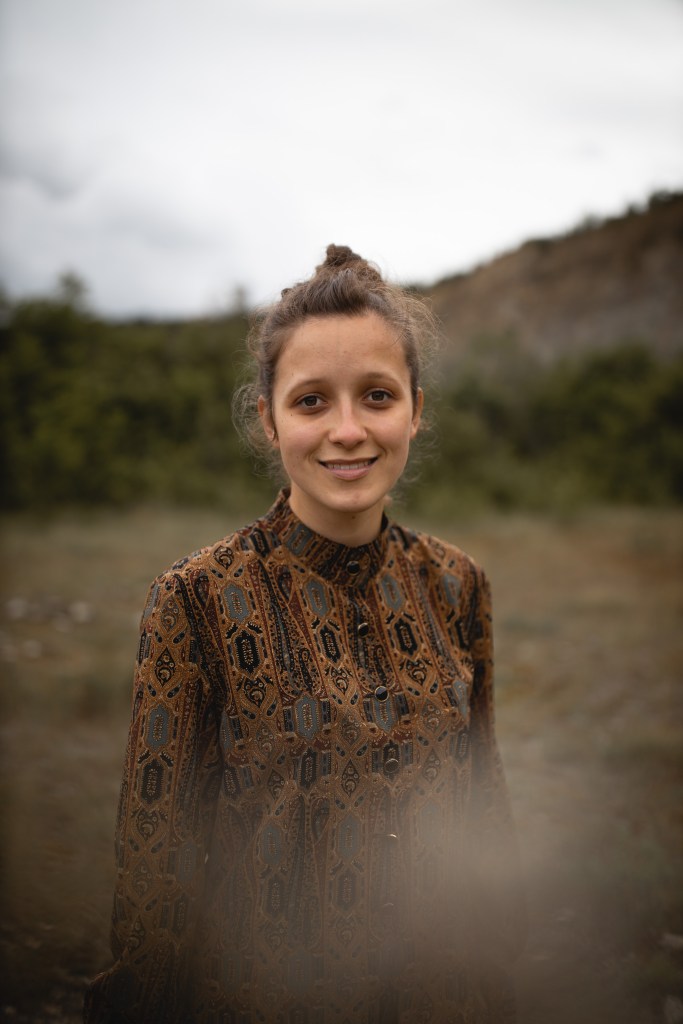
Mara Schilling-Wilhelmi is a PhD researcher at Friedrich Schiller University Jena with a background in chemistry. After completing her Bachelor’s and Master’s degrees, she found herself questioning whether her future really lay at the lab bench. This curiosity led her to shift paths – from traditional experimental chemistry to the rapidly evolving field of artificial intelligence. Today, her work focuses on how large language models can unlock decades of chemical knowledge, make complex data accessible, and support chemists in their everyday research.
Science Is Not Magic – It’s Curiosity
When I was at school, I didn’t grow up dreaming of becoming a scientist. I didn’t have a ten-year plan or a clear idea of what I wanted to do. In fact, no one in my family had taken that path before me. Science wasn’t something that felt like “mine” from the beginning.
What I did have, though, was curiosity.
Looking back, I can’t point to a single defining moment that made me choose chemistry. Instead, it was a series of small encounters that slowly built my fascination. A teacher who made chemistry feel alive instead of abstract. Simple experiments where two colourless liquids suddenly turned bright and vibrant, as if something invisible had come to life. And later, a school internship in a laboratory, where – despite my lack of experience – I realised that I could actually create something new. New molecules. Something that hadn’t existed before.
That feeling stayed with me.
It eventually led me to study chemistry, even though there were moments when it felt overwhelming and difficult. But what kept me going was not just the subject itself – it was the environment. Being surrounded by people who were just as curious, just as motivated to understand how things work, and just as willing to struggle through complex problems together. There is something incredibly powerful about sharing that kind of curiosity.
And yet, whenever I tell people that I am a chemist, I often hear the same response:
“I was never good at chemistry.”
“I just can’t understand it.”
I don’t believe that.
FSU Jena
I think many people decide very early on that something is “not for them”. We tend to underestimate ourselves and overestimate everyone else. But science is not some kind of magic that only a few people can understand. At its core, it is about asking questions, trying things out, making mistakes, and slowly figuring things out. It’s about curiosity – and curiosity is something we all have.
This is one of the reasons why I care so much about sharing my enthusiasm for science. I want to encourage young people – especially girls and women – to see that they can belong in these fields. But I also want to reach beyond that. Science shouldn’t feel intimidating or distant. It should feel accessible, exciting, and relevant.
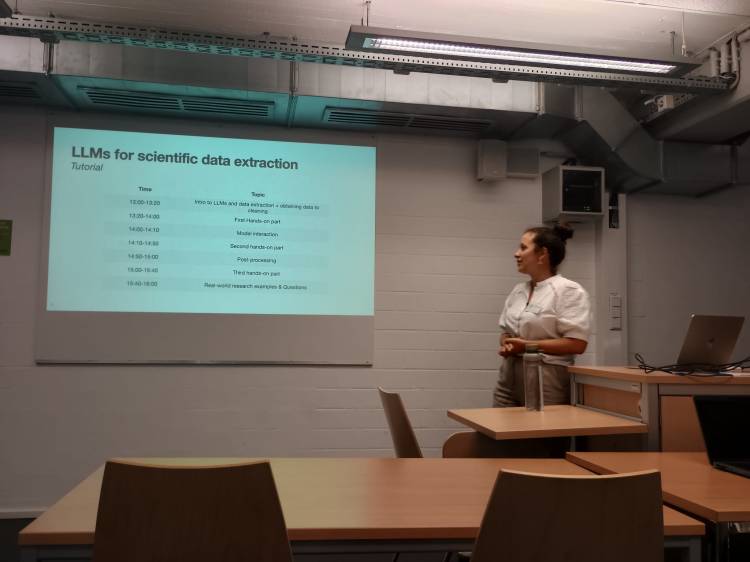
So if you’ve ever thought that science isn’t for you, or that chemistry is too complicated, I’d love to invite you to come and see for yourself. Come by my talk, ask questions, and maybe let yourself be surprised – because understanding science is not about being “naturally talented.” It’s about curiosity. And that’s something everyone can have.
Today, my own curiosity has led me to a place where chemistry meets another field that many people feel unsure about: artificial intelligence.
In my current research, I work at the intersection of chemistry and AI – two areas that are often seen as complex, sometimes even intimidating. And interestingly, AI is facing a similar kind of skepticism that chemistry often does. Not only from the general public, but also from within the scientific community itself.
In my talk, “Chemistry Meets AI – Partners or Rivals?”, I want to explore exactly this question. Is AI something researchers should be worried about – or can it become a powerful tool?
You can connect with Mara on LinkedIn.

