Fishing B cells for antibody discovery to fight multidrug-resistant bacteria
– Interview with Enisa Smlatic
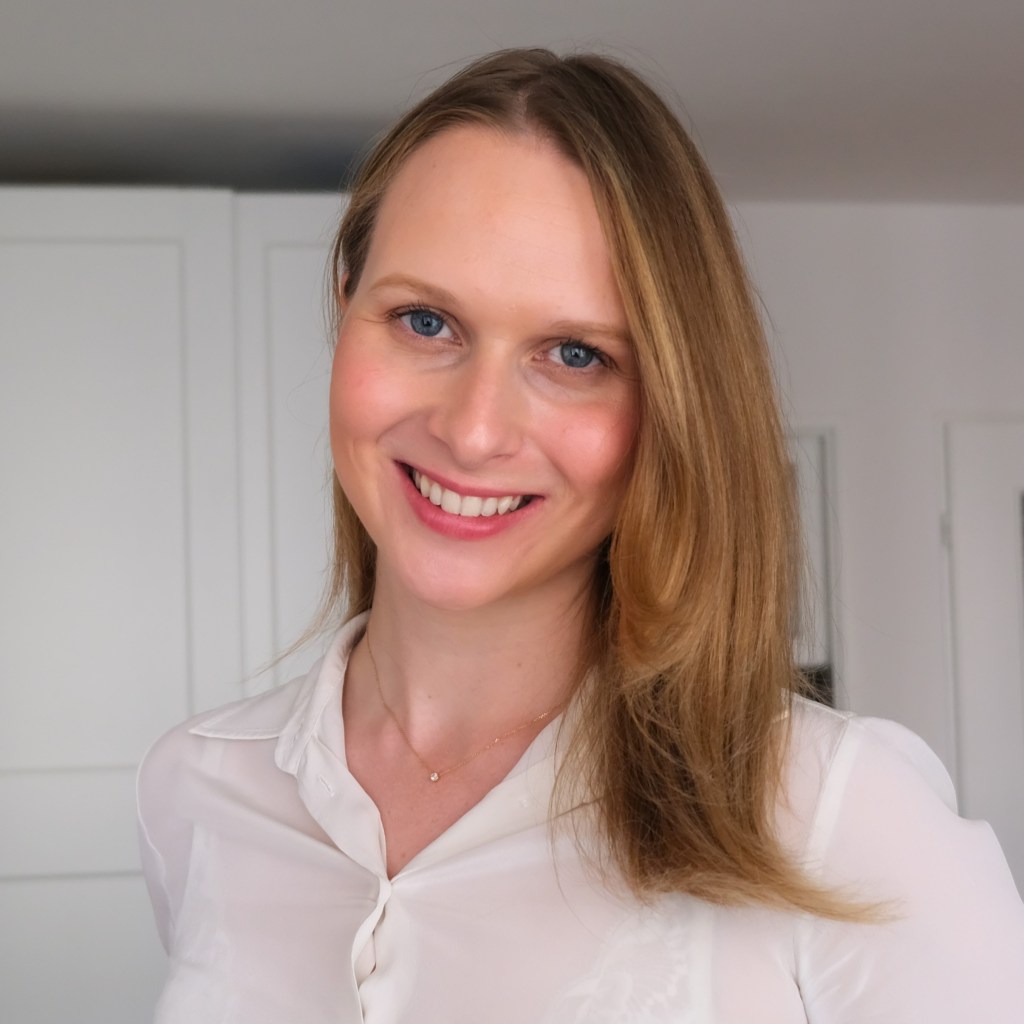
LMU Klinikum
Soapbox: Did you choose a scientific career or did the scientific career choose you? Can you tell us about your journey into the world of science and what inspired you to pursue your particular field?
Enisa Smlatic:I would say that it was a bit more nuanced – I did not come from a family of scientists. As a child, I was more exposed to the arts and languages and thought of becoming a professional classical dancer, which did not work out due to spine issues. At the same time, I had an interest in perfumery, which introduced me to the world of molecules. I found the concept of a molecule both fascinating and strange – these invisible entities shaping the world around us. Already as a seven-year-old, I tried to grasp the concept of molecules. Years later this curiosity evolved into my interest in pharmacotherapy: the phenomenon that a molecule can bind to a receptor in the body and trigger one or multiple specific effects. That realization was pivotal for me as I decided to study pharmaceutical sciences. Another important factor
shaping my journey was a sense of responsibility; as a fortunate person growing up in Belgium, I felt it was important to use that privilege to contribute meaningfully to helping others, therefore I decided that one day, I want to be developing life-saving medicines. Initially, I was very interested in toxicology, but I kept finding myself involved in projects related to infectious diseases. A defining moment came during an unplanned stay in Brazil
during the Zika epidemic in 2016: witnessing the real-world impact of infectious diseases strengthened my motivation and made my path clearer. I became deeply driven by the idea that healthier societies are fundamental to economic stability and peace.
Soapbox: During your journey as a scientist, what challenges have you encountered along the way? And if you had the power to alter one (or more) aspect(s) of the scientific culture, what would you change and why?
Enisa: One of the main challenges I’ve encountered is the gap between scientific discovery and real-world translation. Working at the bench can sometimes feel very disconnected from the reality of a medicine actually reaching patients. Too often, both in industry and academia, decisions about which projects move forward are driven by short-term financial considerations or the pressure to publish and secure funding, rather than by long-term
medical need or strategic preparedness.
In my field, for example, I work on antibody-based therapies against multidrug-resistant bacterial infections. It’s still a relatively small area because antibiotics, for now, continue to work okay-ish and developing therapeutic antibodies is both time-consuming and expensive. As a result, many large companies prefer to continue investing in incremental improvements
to existing antibiotics rather than pursuing more innovative but riskier alternatives. However, I believe this perspective is short-sighted. With the growing threat of antimicrobial resistance, we will inevitably need new types of therapies, including antibodies. History has shown us that initially overlooked approaches can become transformative—antibody-drug conjugates are a good example of this. They were once met with skepticism and are now a major and rapidly growing therapeutic area mainly for cancer.
If I could change one aspect of scientific culture, it would be the strong emphasis on short-term outputs, particularly publishing trends, over long-term innovation and impact. While publications are important, they can sometimes incentivize following hot topics rather than pursuing high-risk, high-reward ideas. I believe we need to place greater value on innovation,
translational potential, and also on protecting ideas—through mechanisms such as patents—so that promising discoveries have a better chance of ultimately benefiting patients.
Soapbox: What misconceptions do you think people often have about scientists, and how do you aim to change those perceptions?
Enisa: I think a common misconception is that people think of scientists as boring, overly serious and even a bit antisocial. However, I have experienced quite the opposite! During my PhD, I had the chance to attend international conferences, be part of a European research network, and spend time in different research labs across Europe.
In all of these settings, I met people who were not only passionate about their work but who were also fun, open, and great to be around — whether discussing science or just chatting about hobbies over dinner (usually followed by a party, by the way 😊). Research can be challenging and sometimes frustrating, so having that kind of positive and social environment really matters. It helps keep motivation high and makes the whole process much more enjoyable.
I try to challenge these stereotypes by simply being myself and by taking part in science communication events such as Soapbox Science, which help make scientists more visible and approachable. I also think social media has started to shift the narrative in a positive way, by showing scientists as people who are passionate and curious about their work while also having hobbies, friends, and a fun side!
Soapbox: What advice would you give to someone interested in pursuing a career in science?
Enisa: I would encourage anyone interested in pursuing a career in science to actively look for role models and mentors. In my experience, most scientists are approachable and genuinely happy to help — you just have to reach out. I’d also say don’t be afraid to ask questions or seek guidance. You don’t have to figure everything out on your own.
For young women in particular, I understand that it can sometimes be hard to feel represented, especially given how many contributions by female scientists were either purposely hidden or simply overlooked in the past. The good news is that this is changing, and there is now much greater visibility of successful women in science.
Soapbox: What is your day-to-day scientific superpower?
Enisa: I would say that at the point where my mindset shifted from “I am doing research” to “I am a researcher” — to loosely allude to Descartes; if I am able to do research, I am in fact, a researcher. It took me several years to really believe that, because imposter syndrome is real, but that is when things started to click and where the magic happens. That shift gave me a stronger sense of ownership over my projects and experiments and helped me approach challenges with a more constructive mindset; instead of seeing setbacks as a personal failure, I can see them as part of the process. Sometimes biology is a bit of a black box, and one just has to accept that science is messy and complicated — and I can focus on finding solutions. It’s made me more confident in my ability to move projects forward — and to stay positive, even when things don’t go as planned.e.
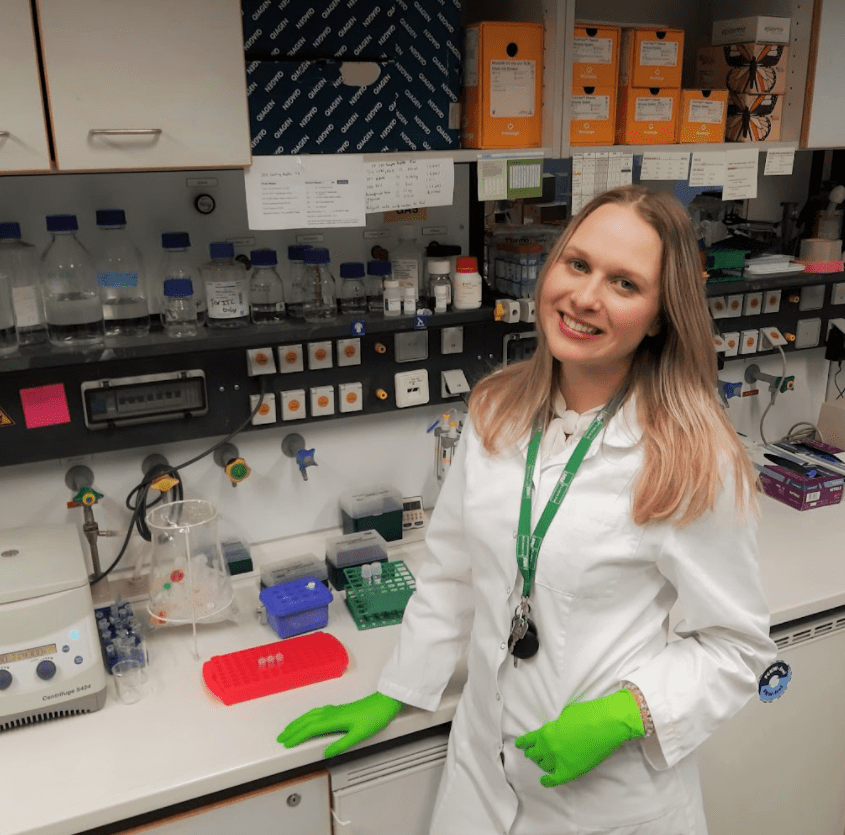
LMU Klinikum
Soapbox: Deserted island: which scientific gadgets would you bring?
Enisa: Honestly, I think being stuck on a deserted island would be the perfect opportunity to finally catch up on all my reading!
Soapbox: Do you have any fascinating do-it-at-home experiments, books, or podcasts to recommend?
Enisa: I have to admit I do not have any fancy go-to do-it-at-home experiments — but my cooking has definitely improved thanks to implementing protocol-style cooking methods in the kitchen!
Jokes aside, I was really impressed by the book “Right Kind of Wrong: The Science of Failing Well” by Dr. Amy Edmondson. She highlights the importance of making so-called “intelligent failures” as these kind of failures actually drive innovation and progress. It reshaped how I approach my research projects and how I think about life in general. I think this book is definitely a must-read for early-career scientists, who often beat themselves up on making mistakes during their training — I know I have. In reality, many of these moments we call “mistakes” and “a waste of time” are in reality a crucial part of the learning process and can even lead to unexpected scientific observations.

